Walmart buys Vibe.co, Forbes bets on creators — two moves rewriting who controls programmatic reach and SMB access to CTV in 2026.
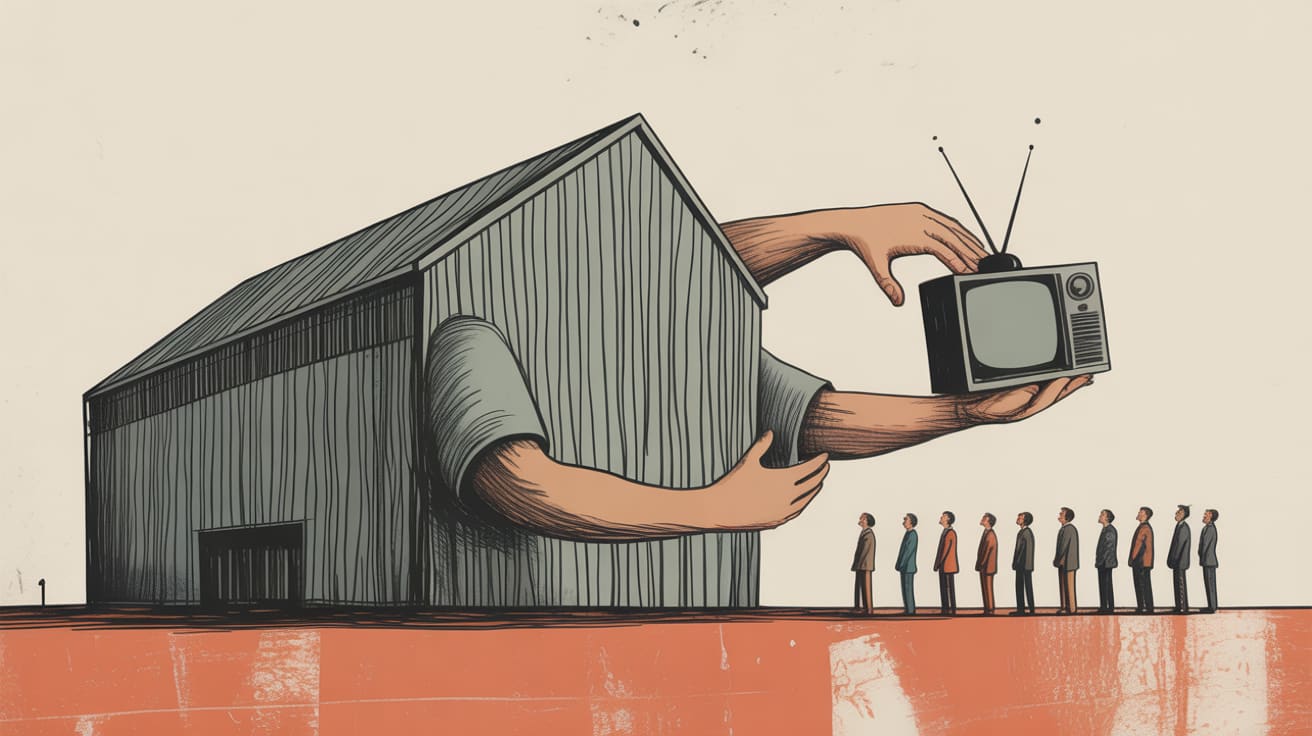
Two moves landed last week that look unrelated on the surface. Walmart quietly acquired self-serve CTV platform Vibe.co. Forbes quietly started routing audience growth through independent creators. Read them together and a cleaner story emerges: the intermediary layer of the ad stack is being systematically absorbed — by retailers on one end, by publishers on the other.
For programmatic practitioners in Southeast Asia, both moves carry direct operational implications. The architecture of reach is changing faster than most media plans account for.
Walmart’s Vibe Play Is a Retail Media Land Grab, Not a CTV Story
The headlines framed Walmart’s acquisition of Vibe.co as a connected TV story — a retailer wooing SMB advertisers into streaming inventory. That framing is technically accurate and strategically incomplete.
What Walmart actually acquired is a self-serve demand pipeline. Vibe.co built its reputation on making CTV accessible to advertisers who couldn’t clear the floor CPMs of premium programmatic deals — small e-commerce brands, regional retailers, direct-to-consumer operators. Walmart Connect now owns that onramp.
The implication: Walmart is building a closed-loop retail media network where first-party purchase data from 255 million weekly shoppers can be matched against CTV viewership, and small advertisers can buy into that system without a trading desk. That’s a materially different proposition than buying Hulu inventory through a DSP.
For Southeast Asian brands watching this: Shopee, Lazada, and Grab are all sitting on comparable first-party data stacks. The question isn’t whether they build equivalent self-serve CTV products — it’s when. Brands that learn to operate inside retail media walled gardens now will have a structural advantage when those pipes open regionally.
Forbes and the Creator Arbitrage on Audience Ownership
Forbes is running a quieter but equally instructive experiment. As Digiday reports, the publisher is testing a creator-led model to grow its audience off-platform — using independent creators and their existing followings to extend Forbes content reach beyond owned channels.
This is a direct response to a familiar problem: platform algorithms have made organic off-platform distribution unreliable, and paid distribution is expensive at scale. Creators solve both problems simultaneously. They provide distribution and contextual credibility that a brand post alone cannot manufacture.
The structural wrinkle Forbes is reportedly testing involves giving creators a more formal stake in the content relationship — not just a fee-for-post arrangement, but something closer to co-ownership of the audience signal generated. That’s meaningfully different from influencer marketing as most brands still practise it.
For media buyers, this matters because it changes where engaged, intent-rich audiences actually live. If Forbes’ best-performing audience segments start accumulating around creator profiles rather than Forbes.com, the CPM premium that publisher direct buys traditionally commanded gets complicated fast.
The Programmatic Middle Is Getting Squeezed From Both Ends
Take both moves together and a pattern becomes legible. On one side, retailers are building vertically integrated ad tech that connects purchase data to media inventory, removing the need for independent DSPs or agency trading desks for a growing segment of advertisers. On the other, publishers are pushing audience development into creator ecosystems that exist partly outside their own measurable inventory.
The programmatic middle — the open web, the independent exchange, the standard display campaign — is getting compressed. Not eliminated, but repriced and de-prioritised by the parties who historically fed it.
This has real budget implications. Brands running standard prospecting campaigns through open programmatic channels in 2026 are paying for reach that is increasingly residual — audiences that haven’t been captured by a retail media network, a walled garden, or a creator-led content cluster. That’s not nothing, but it’s not where the signal concentration is moving.
The tactical response isn’t to abandon programmatic — it’s to restructure where in the funnel open programmatic does its job. Upper-funnel awareness on CTV through emerging retail media pipes. Mid-funnel retargeting in walled gardens where first-party data is richest. Open programmatic reserved for contextual targeting plays where cookie-based approaches have already degraded.
What Southeast Asian Media Teams Should Actually Do This Quarter
The Walmart-Vibe acquisition and the Forbes creator pivot are both US-originated moves, but their logic maps cleanly onto the Southeast Asian media landscape — which, if anything, has a head start on some of these dynamics.
ShopeePay, GrabAds, and LINE’s advertising products already operate as closed-loop systems with first-party transaction data. The self-serve layer for these platforms is less mature than what Vibe.co built for CTV, but the data infrastructure underneath is comparable. Media teams that invest now in understanding the audience architecture inside these platforms — not just buying through them opportunistically — will be better positioned as self-serve tooling matures.
On the creator side, Southeast Asia’s creator economy is large, fragmented, and underleveraged for performance outcomes. Most brands still treat creator partnerships as brand awareness plays with soft measurement. The Forbes model suggests a harder integration is possible: creators as audience development infrastructure, with measurable downstream impact on owned media traffic and first-party data capture.
Building a small test — three to five creator partnerships with explicit data-capture goals attached — is a tractable Q3 project for any digital team with a functioning CRM. The learning curve on creator-as-distribution is steeper than it looks from the outside, and starting that education now is cheaper than paying to catch up in 18 months.
The open question worth sitting with: as retail media networks absorb more of the self-serve ad stack, and creators absorb more of the publisher audience relationship, what exactly is the independent trading desk’s value proposition in 2027 — and who in your organisation is preparing an answer?
At grzzly, we spend a lot of time helping Southeast Asian brands navigate exactly this kind of structural shift — translating what’s happening at the infrastructure level into media strategies that hold up against real budget scrutiny. Whether you’re re-evaluating your programmatic stack or trying to build a creator-led audience play with actual measurement attached, we’d rather talk specifics than generalities. Let’s talk
Sources
Written by
Neon GrizzlyFluent in DSPs, bid strategies, and the baroque architecture of the modern ad stack. Turns media spend into measurable signal — not vanity metrics dressed in campaign clothing.