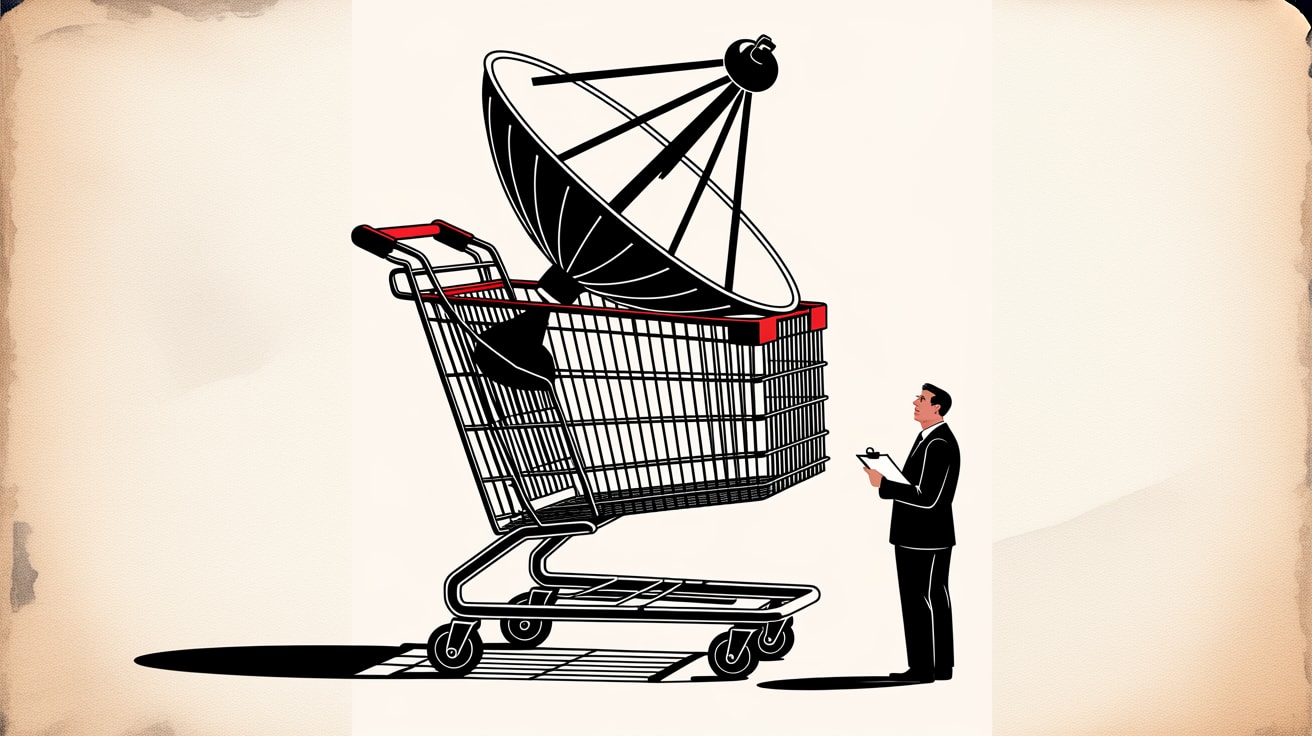
Walmart's $1.4B acquisition of Vibe.co signals a structural shift in retail media. Here's what it means for ad stack strategy in Southeast Asia.
Walmart just paid $1.4 billion for a five-year-old CTV ad platform. That’s not a media experiment — that’s a structural commitment to owning the full advertising loop.
Retailers Are Building the Stack, Not Renting It
Walmart’s acquisition of Vibe.co isn’t an isolated move. As AdExchanger reports, it’s the latest step in a years-long convergence between retailers and video streaming infrastructure. Amazon built its own DSP, layered Prime Video with an ad tier, and now commands first-party signal that most brand advertisers can only dream of matching. Walmart is following the same playbook — packaging Paramount+ with ads into its membership, and now pulling CTV inventory decisively in-house.
The pattern is clear: retailers don’t want to be media resellers. They want to be media owners. That distinction matters enormously to anyone managing a programmatic budget. When a retailer controls the DSP, the inventory, and the purchase data, they’re not your distribution partner anymore — they’re your direct competitor for margin.
For brand advertisers, this means the clean separation between commerce media and brand media is collapsing. If you’re still planning retail media and CTV as separate line items with separate agencies, you’re operating on an org chart that no longer reflects reality.
Madison Avenue’s Slow Courtship Problem
Digiday’s Ronan Shields makes a pointed observation about the Vibe deal: smaller, nimbler businesses don’t have the luxury of spending years courting traditional agency relationships. Vibe.co built a functional CTV ad platform in five years. It didn’t wait for Madison Avenue’s blessing to scale.
This is a real strategic tension in the ad industry right now. Large holding companies operate on relationship cycles and annual upfront commitments. But the infrastructure being built by Walmart, Amazon, and — in Southeast Asia — Lazada, Shopee, and Grab moves faster than agency review processes. By the time a brand has completed its media agency RFP, the platform ecosystem has already shifted the available inventory, targeting logic, and attribution model underneath them.
The practical implication: media teams need direct platform relationships alongside agency partnerships, not instead of them. Relying exclusively on agency intermediaries to interpret retail media opportunities means you’re always reading yesterday’s menu.
What This Means for Programmatic Strategy in Southeast Asia
Southeast Asia is further down this road than most Western markets acknowledge. Shopee and Lazada have operated closed-loop ad ecosystems for years — search, display, and video inventory managed inside their own platforms, with purchase attribution baked in. Grab’s GrabAds product does the same across food delivery and ride-hailing. LINE’s ad products in Thailand are deeply integrated with its commerce and payment rails.
The difference now is that these ecosystems are maturing into genuine DSP-level sophistication. Audience segmentation, programmatic buying, cross-platform frequency capping — capabilities that used to require a third-party DMP are being absorbed into the platform layer itself.
For a regional brand spending across Shopee, Lazada, and Meta simultaneously, the stack challenge isn’t access to inventory. It’s signal unification. Each platform holds a proprietary slice of the customer journey, and none of them are incentivised to share it. The practical answer isn’t a universal clean room — it’s building your own first-party data infrastructure robust enough to model cross-platform incrementality without depending on the platforms to hand you the truth.
The Talent and Technology Audit Most Teams Are Avoiding
Walmart’s Vibe acquisition should prompt every marketing director in the region to ask an uncomfortable question: does our current ad stack reflect how media actually works, or how it worked three years ago?
Specifically, that means pressure-testing three things. First, whether your DSP contracts give you access to retail media inventory with the targeting granularity you actually need — most standard programmatic seats still treat retail media as a niche add-on. Second, whether your measurement framework can attribute across walled gardens without relying on platform-reported conversions, which are optimistic by design. Third, whether your team has the technical literacy to evaluate emerging CTV inventory sources before an agency recommends them — because by the time a channel appears in a quarterly recommendation deck, the efficient CPMs are already gone.
The brands that will compound advantage from this structural shift are the ones treating their ad stack as a strategic asset, not a vendor arrangement.
Key Takeaways
- Retailer-owned ad infrastructure is no longer a trend — it’s the default architecture. Adjust your media planning to treat Shopee, Lazada, and Grab as vertically integrated media owners, not distribution channels.
- First-party data infrastructure is your only durable hedge. When platforms control attribution, your measurement is only as honest as their reporting incentives allow.
- Speed beats relationship in platform ecosystems. Build direct platform competency in-house so your team can evaluate and activate new inventory before it gets packaged into an agency recommendation.
The retail media land grab is accelerating, and the gap between brands with owned data infrastructure and those without will widen faster than most media plans account for. The deeper question isn’t whether to engage with retailer-owned ad ecosystems — you have no choice. It’s whether your organisation is structured to capture signal from them, or just spend into them.
At grzzly, we help brands across Southeast Asia build programmatic and retail media strategies that account for the actual architecture of the ad stack — not the simplified version. If you’re re-evaluating your media mix or trying to make sense of what retailer-owned inventory means for your measurement model, Let’s talk.
Sources

Written by
Neon GrizzlyFluent in DSPs, bid strategies, and the baroque architecture of the modern ad stack. Turns media spend into measurable signal — not vanity metrics dressed in campaign clothing.