Unilever activated 50,000 creators for the World Cup. Here's what that scale means for media buying, brand safety, and AdTech infrastructure in 2026.
Unilever described its FIFA World Cup creator campaign as “a Super Bowl every two days.” That framing is either the most exciting thing in media right now, or the most revealing about how poorly equipped most AdTech stacks are to handle it.
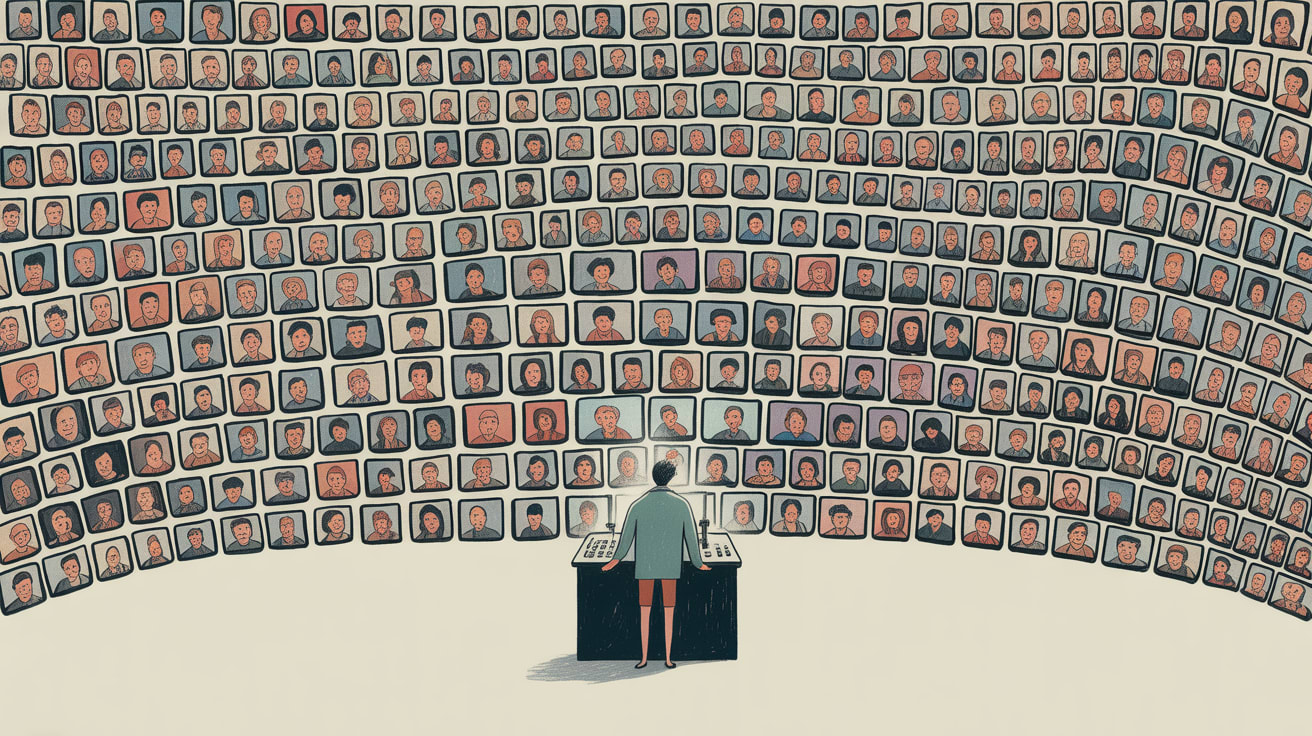
Fifty thousand creators. Globally activated. Simultaneously. That’s not an influencer campaign — that’s a distribution network. And operating one at that scale exposes every seam in how brands currently think about media buying, measurement, and brand safety.
When Creator Volume Becomes an Infrastructure Problem
Digiday’s reporting on Unilever’s World Cup activation describes 50,000 creators across markets, paired with large-format in-person pop-ups in host cities. The ambition is clear: saturate cultural moments with authentic, always-on content rather than chasing a single broadcast slot.
But here’s the operational reality no one’s celebrating at Cannes: managing 50,000 creator relationships at broadcast pace requires infrastructure that most brands — and most agencies — simply don’t have. Contract versioning, content approvals, performance attribution, brand safety monitoring, and payment reconciliation across 50,000 nodes is not a workflow problem. It’s an AdTech problem.
The brands that will actually execute this well in 2026 and beyond are the ones treating creator programs as a media channel with proper tooling — not a PR activation run out of spreadsheets. In Southeast Asia, where platforms like TikTok, Shopee Live, and LINE have creator monetisation baked into commerce infrastructure, the tooling already exists. The question is whether regional brand teams are plugged into it.
The Measurement Gap That Everyone Ignores
AdExchanger’s roundup this week flagged a quieter tension: as CMOs trim creative budgets, the creator economy is absorbing more spend — but the measurement standards haven’t caught up. “Confused creators,” as AdExchanger put it, are partly a symptom of brands that haven’t defined what success actually looks like at the activation level.
Unilever’s “Super Bowl every two days” framing is compelling for share-of-voice. It’s much harder to defend in a quarterly business review if the attribution model is still last-click or, worse, media equivalency value (MEV) estimates borrowed from PR.
The honest answer is that creator content at this scale needs the same measurement rigour applied to programmatic: incrementality testing, hold-out groups, and conversion lift studies tied to actual SKU movement. In markets like Indonesia and the Philippines — where social commerce conversion happens inside the platform, not on a brand’s owned site — that means working with platform measurement APIs directly, not relying on third-party panels that don’t reflect local shopping behaviour.
Consolidation as a Counter-Move
While Unilever was deploying outward into a creator network of 50,000, Samsung India moved in the opposite direction — consolidating its ₹300 crore ATL media business under a single lead agency structure through Cheil India and Havas India, following a multi-agency review reported by AdTech Today.
These aren’t contradictory strategies. They’re two responses to the same underlying pressure: complexity at scale requires governance. Unilever needed orchestration infrastructure for its creator army. Samsung India needed a single decision-making layer across its media investment.
For AdTech teams watching this, the signal is consistent: the era of fragmented vendor relationships and parallel agency tracks is becoming expensive to maintain. Whether you’re rationalising your agency roster or building a creator ops function, the underlying question is the same — where does accountability live, and what data flows to it?
In Southeast Asia, this has specific texture. Regional brand teams often operate across six-plus markets with different agency partners, different platform ecosystems, and different regulatory environments. A media consolidation move that works cleanly in India doesn’t automatically translate to a five-market ASEAN structure where Thailand runs on LINE, Indonesia runs on TikTok Shop, and Singapore runs on Meta with Google backup. The consolidation instinct is right; the execution has to be local.
What “At Scale” Actually Demands From Your Stack
Pull back from both stories and the shared theme is operational maturity. Unilever’s creator play only works if the AdTech layer — creator discovery, contract management, content moderation, performance attribution, and payment — can run at the pace of cultural moments. Samsung’s consolidation only delivers ROI if the unified agency structure is backed by a clean data foundation: a single source of truth for audience segments, campaign performance, and cross-channel attribution.
AdExchanger noted this week that Apple has abandoned its ad network ambitions. That’s another data point in the same direction — the middle layer of ad infrastructure is under pressure, and the winners will be platforms and brands that control clean, consented first-party data rather than renting someone else’s audience proxy.
For brands in Southeast Asia building toward cookieless environments, the creator activation model is actually underrated as a first-party data strategy. An activated creator with a UTM-tracked link and a post-purchase survey is generating consented, attributed data at a fraction of the cost of a DMP license. At 50,000 creator nodes, that’s a meaningful signal layer — if your MarTech stack is built to capture it.
Key Takeaways
- Creator programs at Unilever’s scale require AdTech infrastructure — discovery, attribution, brand safety, and payment tooling — not just a talent roster and a brief.
- Media consolidation moves like Samsung India’s deliver ROI only when underpinned by a unified data architecture; the agency structure is the governance layer, not the solution itself.
- In Southeast Asia, creator activations are an underutilised first-party data source — but only if your MarTech stack is configured to capture and attribute what those creators generate.
The real question these moves raise isn’t about budget allocation or agency structure. It’s about what kind of AdTech infrastructure a brand needs to operate at cultural velocity without losing measurement discipline. As creator scale grows and third-party identity signals continue to erode, the brands that treat their creator network as a data asset — not just a reach play — will be the ones with something defensible to show the CFO.
At grzzly, we work with brands across Southeast Asia navigating exactly this intersection: scaling creator and paid media programs while building the data infrastructure to measure them honestly. If your current stack isn’t keeping pace with your activation ambitions, that’s a conversation worth having. Let’s talk
Sources

Written by
Rogue GrizzlyOperating at the contested frontier of cookieless targeting, clean rooms, and identity resolution. Comfortable where the infrastructure is shifting and the playbooks have not yet been written.