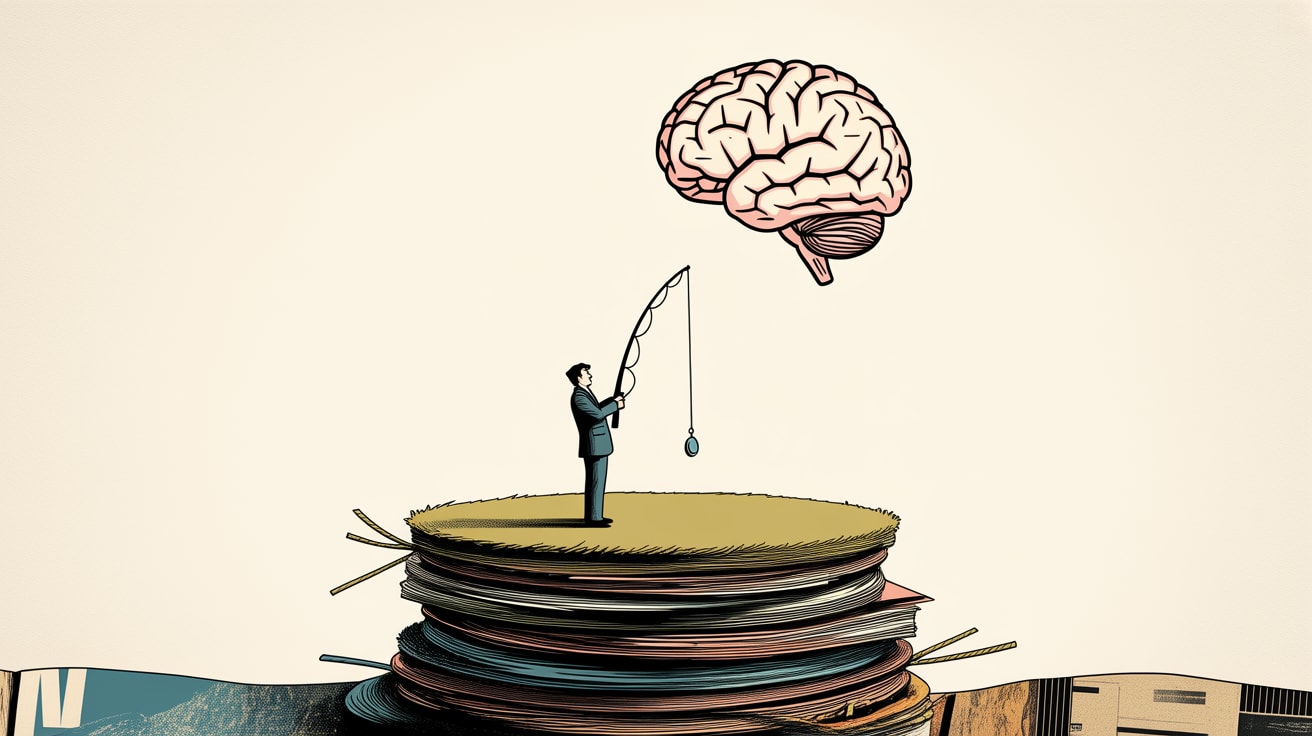
Reddit is the #2 AI-cited domain on the web. Here's what that tells us about where search authority is being rewritten — and how to respond.
Reddit pulls an estimated 1.2 billion monthly visitors from AI platforms — second only to YouTube, sitting comfortably ahead of Wikipedia, Amazon, and every major publisher you’ve been optimising for. That single number should quietly rearrange your content priorities for the rest of 2026.
The Signal Hidden Inside Reddit’s AI Dominance
Ahrefs reports that Reddit ranks #2 in the US for organic SEO traffic at 727.3 million estimated monthly visits, and that same authority translates directly into AI citation frequency. When ChatGPT, Perplexity, or Google’s AI Overviews need to substantiate a claim about a product category, a brand experience, or a buying decision — they reach for Reddit. The reason isn’t mystery: Reddit threads are structured around genuine human opinion, timestamped, community-validated, and semantically rich. For a large language model trying to assess entity credibility, that’s close to ideal training signal.
For Southeast Asian brands, this creates an underexploited opening. English-language Reddit threads covering categories like fintech, e-commerce logistics, skincare, and travel consistently surface in AI responses for regional queries — yet local brand participation in those spaces is thin. A Lazada seller or a regional neobank contributing substantively to relevant subreddits isn’t doing social media. They’re building the kind of third-party entity signal that GEO depends on.
What Generative Engine Optimisation Actually Requires Now
The guidance from SEO.com on choosing a GEO agency cuts to something practitioners are still arguing about: the discipline isn’t a rebranded keyword strategy, it’s fundamentally about structured entity authority. LLMs don’t rank pages — they weight entities. Your brand needs to exist coherently across multiple authoritative surfaces: your own structured content, third-party citations, forum validation, and clean schema markup that connects those surfaces into a recognisable knowledge graph node.
What this means in practice for a mid-size Southeast Asian brand: before worrying about prompt engineering or AI ad placements, audit whether your brand entity is consistently named, described, and attributed across the platforms AI models actually crawl. Inconsistent transliterations across Bahasa, Thai, and English — common in regional markets — fragment entity recognition. A brand known as “GrabPay” in one context and “Grab Pay” in another creates ambiguity that degrades AI citation confidence. Clean entity hygiene isn’t glamorous work, but it’s the foundation everything else depends on.
Google’s Spam Update and the Slow Death of Synthetic Authority
Semrush confirmed that Google’s June 2026 spam update completed its rollout at the end of last month. The update continues a consistent direction: synthetic content at scale, low-quality link networks, and thin affiliate structures are being progressively discounted — not just penalised in isolation, but contextually devalued when the surrounding entity signals are weak.
The strategic implication is worth sitting with. If your current SEO approach relies on volume — many pages, many backlinks, many variations of similar content — the spam updates aren’t your most urgent threat. The more pressing one is that AI search systems may simply not cite you regardless of your traditional ranking position. Google’s AI Overviews increasingly bypass high-ranking pages in favour of sources with stronger entity and community validation. Ranking #1 for a commercial keyword while being invisible in AI-generated answers is an emerging reality for brands that haven’t updated their mental model of what search visibility means.
What the Bing Transition Signals About Crawl Infrastructure
Fabrice Canel, who led Bing’s crawling and indexing team and built IndexNow into the web’s most discussed real-time indexing protocol, retired from Microsoft this week after 27 years. It’s a personnel note on the surface, but it marks a genuine generational shift in how search infrastructure is led. Canel’s IndexNow — which allows sites to push URLs to search engines the moment content changes rather than waiting for crawl cycles — remains actively developed across Bing, Yandex, and a growing list of adopters.
For teams still relying on passive crawl schedules, IndexNow adoption is a low-effort, high-return infrastructure decision. In fast-moving categories — flash sales, news-adjacent content, product launches — the difference between a 4-hour and a 4-minute index time is commercially meaningful. Southeast Asian e-commerce teams running campaigns on Shopee or Tokopedia that simultaneously push content to owned web properties should have IndexNow configured as standard practice, not an optional technical SEO item.
Key Takeaways
- Reddit’s position as the #2 AI-cited domain means brand participation in relevant subreddits is now a GEO signal, not just a community play.
- Entity consistency across languages and platforms — especially critical in multilingual SEA markets — directly affects AI citation frequency.
- IndexNow implementation turns passive crawl schedules into active indexing control; for e-commerce and campaign-driven content, this is table stakes in 2026.
The deeper question that none of this fully resolves: as AI systems increasingly mediate what users discover, who owns the authority layer that sits between brand and consumer? Forum communities, AI platform operators, and structured data standards are all competing to become that layer. The brands paying attention now are the ones quietly building positions in all three — before the competition realises there’s a race happening.
At grzzly, we work with growth teams across Southeast Asia on exactly this intersection — helping brands build the entity authority, structured semantics, and community presence that AI search systems actually reward. If your current search strategy was designed for a world before generative answers, it’s worth a conversation. Let’s talk
Sources

Written by
Sneaky GrizzlyTracking the quiet revolution inside LLM-powered search — where brand mentions, structured semantics, and entity authority rewrite the rules of discoverability before most marketers notice.