Google's Ask Maps and Search Profiles signal a structural shift in discoverability. Here's what entity authority now means for SEO strategy in Southeast Asia.
Three product updates landed within 24 hours last week that, read separately, look like minor Google housekeeping. Read together, they describe the same structural shift: search is reorganising itself around entities, not documents.
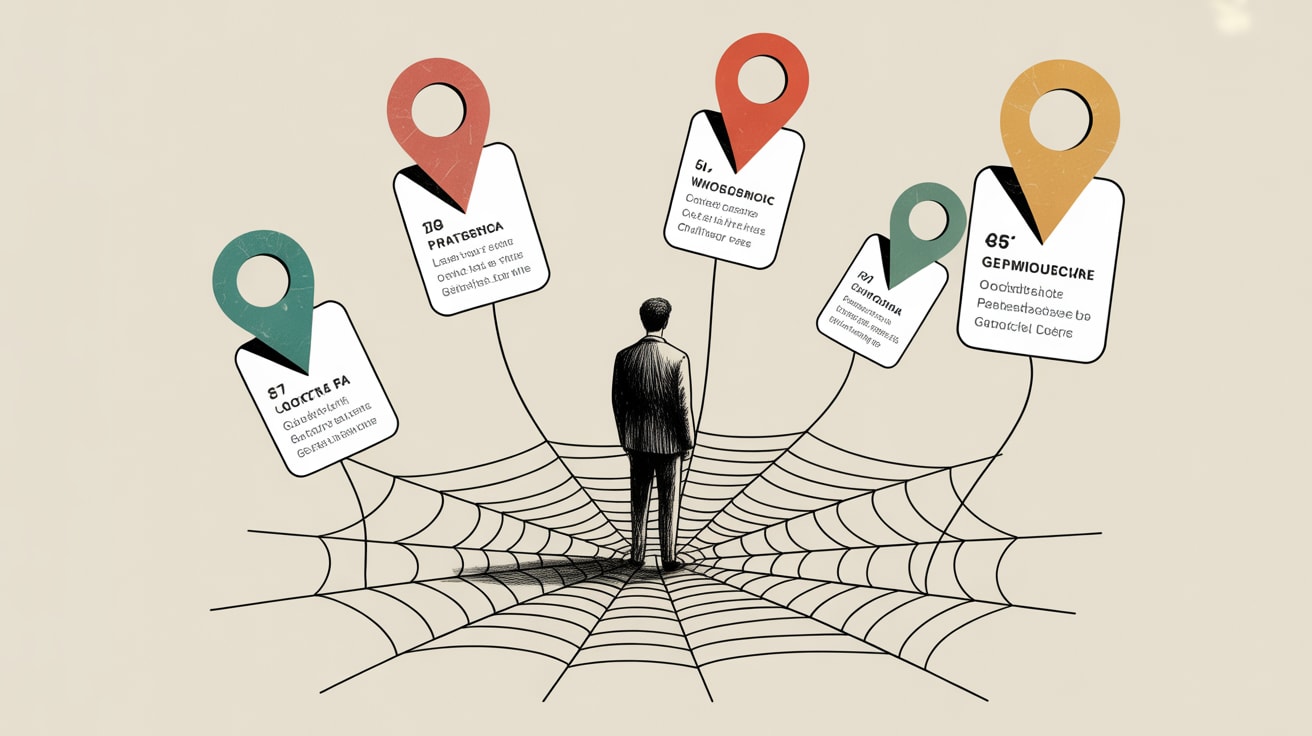
Ask Maps, Search Profiles, and the broader pressure on SEOs to operate at a strategic level are not unrelated announcements. They are three angles on one transition — from a web of pages to a web of verified, structured, interconnected identities. If your brand’s entity footprint is thin, that transition is not your friend.
Ask Maps Just Raised the Floor on Business Profile Completeness
Google’s Ask Maps feature — now surfacing AI-synthesised answers directly inside Maps for complex, multi-condition queries — doesn’t just reward good profiles. It bypasses incomplete ones entirely, as Search Engine Journal reports. A query like “halal ramen near KLCC open after 10pm” requires Google to cross-reference cuisine type, dietary certification, location, and opening hours simultaneously. A profile missing any one of those attributes simply doesn’t qualify as a candidate answer.
This is a meaningful shift from traditional local SEO, where a partially complete profile could still rank on keyword proximity. Ask Maps operates more like a database join than a keyword match — every attribute field is a potential filter. For multi-location brands across Southeast Asia, where operational hours often vary by outlet and language-specific categories are inconsistently populated, the audit surface just got significantly larger. Start with the attributes that function as hard filters: hours, service options, payment methods, and any certification or accreditation fields relevant to your category.
Search Profiles Are an Entity Signal Dressed as a Creator Feature
Google’s new Search Profiles — dedicated landing pages in Discover for publishers and creators — read at first glance as a content creator feature. Semrush’s analysis positions it correctly as something with broader implications for brands: a formalised mechanism for associating content, expertise, and topical authority with a named entity inside Google’s own infrastructure.
This matters for Generative Engine Optimisation specifically. LLMs don’t cite pages; they synthesise from entities they consider authoritative on a topic. A Search Profile creates a Google-native anchor point for that authority — a structured declaration of “this entity produces credible content on these subjects.” For brand editorial teams and thought-leadership programmes, the tactical move is straightforward: claim and populate Search Profiles for key contributors, align their stated expertise with your brand’s core topic clusters, and ensure internal linking connects their bylines to cornerstone content. The entity graph you build inside Google’s infrastructure today influences AI citation patterns tomorrow.
The C-Suite Is Paying Attention — Which Means You Need a Different Vocabulary
Ahrefs published a sharp piece this week on the transition from SEO tactician to search visibility leader. The core argument: AI disruption in search has finally given SEOs genuine executive attention, but most practitioners are still presenting in the language of tactics — impressions, rankings, crawl errors — rather than the language of business risk and revenue visibility.
The framing that lands in a boardroom is not “our rankings dropped.” It is “a structural change in how Google resolves brand queries means 34% of our high-intent local searches may now return a competitor’s profile before ours.” That reframe requires understanding what Ask Maps and Search Profiles represent at a systems level, not just as features to optimise. For growth leads at Southeast Asian brands managing search across markets like Indonesia, Thailand, and Vietnam — each with different platform behaviours, multilingual query patterns, and Google Profiles adoption rates — the strategic argument is even more acute. Search visibility is a cross-functional risk, not a channel metric.
Entity Authority Is Now a Compound Asset — Here’s How to Build It
The practical question: what does a structured entity programme actually look like in execution? Three layers.
First, the Knowledge Graph layer. Ensure your brand entity on Google’s Knowledge Panel is claimed, verified, and populated with structured data — organisation schema, logo, founding date, official social profiles. This is the foundation from which Ask Maps and AI-generated brand summaries draw. Gaps here are not cosmetic; they are factual voids that LLMs fill with inference or ignore entirely.
Second, the local data layer. Every Google Business Profile across your location network should be treated as a structured data asset, not a listing. Prioritise attribute completeness for the filters Ask Maps uses most frequently: hours, service types, language availability, and category-specific certifications. For retail or F&B brands on Grab or Shopee with physical presences, cross-platform consistency between your GBP data and platform merchant profiles matters — LLMs increasingly triangulate across sources.
Third, the authority signal layer. Search Profiles, E-E-A-T signals on key contributor pages, and topic cluster coherence across your editorial output. Think of this as the layer that tells Google not just what your brand is, but what it knows. That distinction is becoming the primary differentiator in AI-mediated search results.
Key Takeaways
- Ask Maps uses business profile attributes as hard query filters — an incomplete profile isn’t ranked lower, it’s excluded entirely from complex local queries.
- Google Search Profiles function as entity authority anchors for brand contributors, with direct implications for how AI search surfaces topical expertise.
- The shift from page-based to entity-based search requires SEO leaders to reframe search visibility as a structural business risk, not a channel metric, to earn and hold executive buy-in.
The brands that will look prescient in 18 months are the ones treating entity infrastructure as a serious investment today — not because Google announced it, but because LLMs are already using it. The question worth sitting with: if an AI were asked to describe your brand’s expertise and credibility right now, what structured evidence would it actually find?
At grzzly, we’ve been mapping entity authority frameworks for Southeast Asian brands across Google, Grab, and regional platform ecosystems — long before most briefs mentioned GEO. If your search visibility strategy still lives primarily in a keyword spreadsheet, that’s probably the conversation worth having next. Let’s talk
Sources

Written by
Sneaky GrizzlyTracking the quiet revolution inside LLM-powered search — where brand mentions, structured semantics, and entity authority rewrite the rules of discoverability before most marketers notice.