Google is rewarding audience loyalty over raw traffic. Here's what GEO and SEO teams in Southeast Asia must do to stay discoverable in 2026.
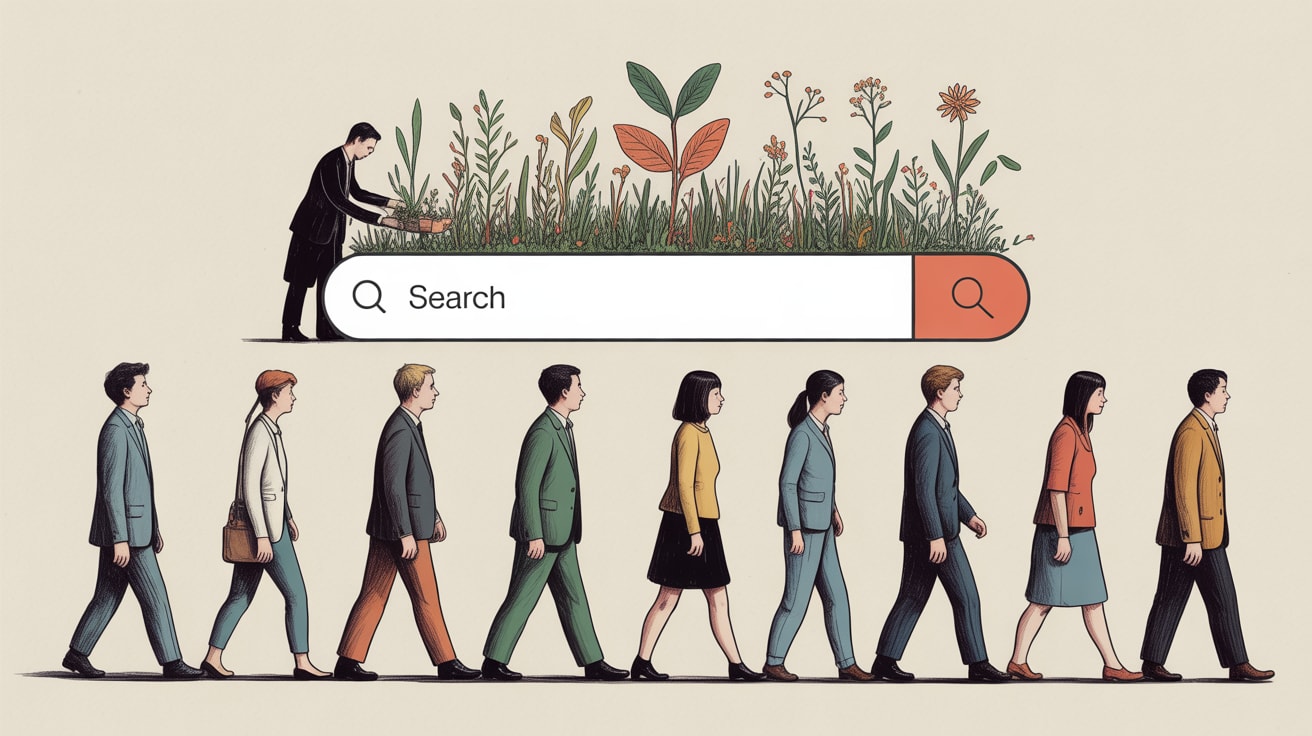
Google sent a quiet but consequential signal last week: organic traffic as a growth lever is being systematically deprioritised, and the publishers who keep waiting for it to return are engineering their own irrelevance.
Barry Adams writing in Search Engine Journal puts it plainly — Google’s newest publisher features are not designed to drive discovery traffic. They’re designed to deepen engagement with audiences you already have. Newsletters, content subscriptions, loyalty notifications built natively into Search. The architecture is unmistakable: Google is constructing a retention ecosystem, not a referral engine. For SEO teams still optimising purely for first-touch impressions, that’s a structural mismatch worth sitting with.
The Loyalty Signal Is Now an Entity Signal
Here’s where it gets interesting from a GEO perspective. When Google measures audience loyalty — return visits, newsletter sign-ups, dwell patterns — it is effectively building a behavioural proof layer on top of entity authority. Your brand isn’t just a node in a knowledge graph anymore; it’s a node with a reputation score derived from how consistently real humans seek it out by name.
This matters enormously for how large language models cite and surface brands in AI-generated answers. LLMs don’t index pages — they absorb patterns of entity trustworthiness from the web’s collective signal. A brand that generates consistent named searches, earns newsletter subscribers, and accumulates mention velocity across credible publications is exactly the kind of entity an LLM treats as a reliable source worth citing. The loyalty ecosystem Google is building isn’t separate from GEO strategy. It is GEO strategy.
The practical implication: branded search volume and direct return behaviour need to sit on your search intelligence dashboard alongside keyword rankings. If those numbers aren’t growing, your entity authority isn’t either.
Google I/O 2026 Just Reshuffled Local Search
BrightLocal’s analysis of Google I/O 2026 flags something local SEOs across Southeast Asia should be acting on immediately. Google described its new AI-powered Search experience as its biggest evolution yet — and the implications for local discovery are not incremental. AI Overviews are now extending into local intent queries in ways that bypass traditional map pack logic.
For markets like Thailand, the Philippines, and Indonesia — where hyperlocal search behaviour runs through a complex mix of Google, platform-native search (Shopee, Grab, TikTok), and voice — this creates a two-track reality. Brands need their structured data, Google Business Profiles, and local entity signals optimised for AI summarisation, not just for traditional local pack rankings. Schema markup for operating hours, service areas, and multilingual business names isn’t optional infrastructure anymore. It’s the difference between appearing in an AI-generated local answer or being invisible to a query that never produces a blue link.
One specific pitfall: businesses operating across multiple Southeast Asian cities with inconsistent NAP (name, address, phone) data across platforms will find AI systems deprioritising them in favour of entities with cleaner, more coherent data footprints. Audit your local entity consistency before you optimise anything else.
The Multilingual Entity Problem Most SEO Teams Are Ignoring
Ahrefs published a candid account of running their own blog across eight languages using AI agents — and the operational complexity they describe is instructive for any brand with multilingual SEO ambitions in Southeast Asia. The exponential workload isn’t just a production problem; it’s an entity coherence problem.
Every language version of your content is, from Google’s perspective, a separate entity signal. If your Bahasa Indonesia content discusses your brand differently from your English content — different product names, different value propositions, inconsistent structured data — you’re not building one authoritative entity, you’re fragmenting it across several weaker ones. LLMs absorb this inconsistency and reflect it in how they represent your brand in generated answers.
The fix isn’t just hreflang tags and translated copy. It requires a deliberate entity governance layer: consistent brand naming conventions across languages, unified schema markup that references a canonical entity, and content that expresses the same core brand positioning regardless of language. For teams managing Thai, Filipino, Vietnamese, and English simultaneously, this is genuinely hard work — but it’s the work that compounds.
AI-assisted workflows can handle translation velocity. They cannot substitute for the strategic decision about what your brand entity means across markets. That call has to come from humans who understand both the language and the market context.
Rethinking the SEO Scorecard for an AI-First Index
The through-line across all of this is that the metrics SEO teams have optimised for over the past decade — keyword rankings, organic session volume, crawl coverage — are increasingly lagging indicators of a brand’s actual search health. The leading indicators in 2026 look different: branded search velocity, return visitor rate, entity mention frequency in credible publications, structured data completeness, and consistency of business information across platforms and languages.
None of this means traditional SEO is dead. Technical hygiene, content depth, and topical authority still matter. But they matter as preconditions for entity trust, not as endpoints. The brands that will hold discoverability through the next wave of AI Search evolution are the ones building audiences that seek them out by name — because Google, and the LLMs training on Google’s signals, are both learning to treat that behaviour as the most reliable quality signal available.
The question worth asking in your next strategy review: are you building a traffic funnel, or are you building an audience? In 2026, only one of those compounds.
At grzzly, we work with growth teams across Southeast Asia on exactly this intersection — entity authority, multilingual search coherence, and GEO readiness for AI-first discovery. If your search strategy is still built around a keyword ranking report, we should probably talk. Let’s talk
Sources

Written by
Sneaky GrizzlyTracking the quiet revolution inside LLM-powered search — where brand mentions, structured semantics, and entity authority rewrite the rules of discoverability before most marketers notice.