New research shows AI visibility rankings are mostly statistical noise. Here's what Southeast Asian marketers need to rethink about GEO measurement.
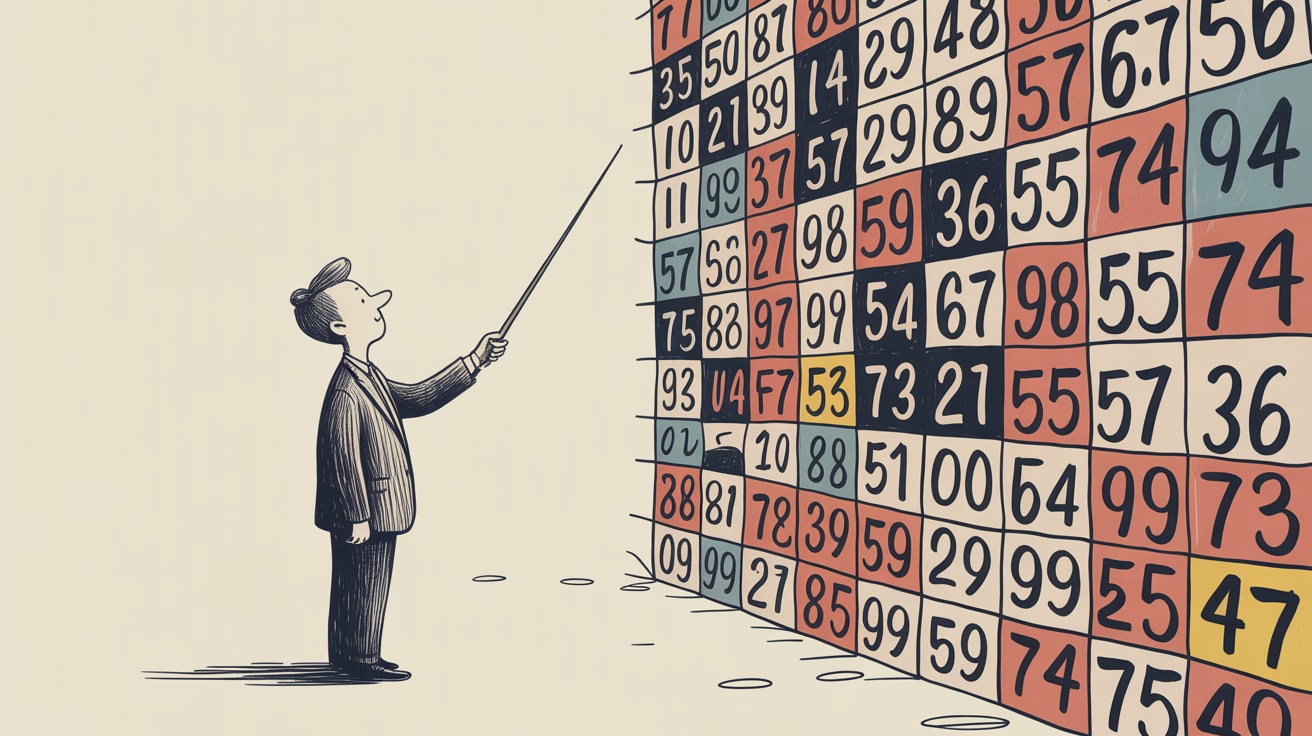
That visibility score your team celebrated last week in the GEO dashboard? Run it again. It’s probably different now.
The Measurement Problem Hiding Inside Your GEO Reporting
New academic research surfaced by Search Engine Journal this week lands an uncomfortable finding: AI visibility rankings — the scores measuring how often your brand appears in ChatGPT, Perplexity, Gemini, and similar outputs — fluctuate significantly between individual query runs, even when nothing about your content has changed. The culprit is the probabilistic nature of large language models. Every generation pass is a fresh sampling event, which means a single reading of your AI visibility score carries substantial measurement error baked in by design.
The research proposes a statistical stopping rule — essentially a minimum number of repeated measurement runs before a visibility reading becomes trustworthy enough to act on. The practical implication is sharp: brands currently treating a one-off GEO audit as a reliable baseline are building strategy on a single data point from a noisy distribution. For Southeast Asian marketing teams reporting AI search performance to leadership on monthly cycles, this changes the conversation. You need aggregated readings, not snapshots.
What “Entity Authority” Actually Means When LLMs Are Sampling
The instability finding doesn’t mean GEO is unmeasurable — it means the measurement discipline needs to catch up to the channel. Think of it the way media planners learned to treat reach and frequency metrics: one exposure number means nothing without the distribution behind it.
What does hold relatively stable across LLM sampling runs is whether your brand has been encoded as a recognised entity with consistent, corroborated associations. When Perplexity or ChatGPT repeatedly pull your brand into responses about, say, logistics software in Thailand or beauty retail in the Philippines, that’s entity authority at work — the model has enough structured, reinforced signal about who you are and what you’re relevant to that it surfaces you probabilistically even under noisy conditions.
The tactical implication: optimise for entity depth, not visibility frequency. That means structured schema, consistent brand descriptors across third-party publications, and citation in authoritative vertical sources — not just high-volume brand mentions. A Shopee merchant mentioned once in a Nikkei Asia analysis carries more entity weight than fifty appearances in thin affiliate content.
AI Agent Standards Are Coming — and They Will Change How Content Gets Discovered
Separately, Search Engine Journal’s Chris Green published a useful primer this week on the emerging stack of AI agent protocols — the acronym soup of standards governing how autonomous AI agents traverse, read, and act on web content. If GEO felt abstract before, agentic search makes it structurally consequential.
Here’s the part most marketers are sleeping on: as AI agents become the primary interface for research, procurement, and comparison tasks — a pattern already visible in enterprise buying behaviour across Singapore and Malaysia — your content’s discoverability shifts from “does Google index this” to “can an agent correctly parse, trust, and act on this.” That requires machine-readable structure, clear entity relationships, and content designed to answer agent-initiated queries, not just human search intent.
For brands operating across Southeast Asia’s fragmented platform ecosystem — Lazada, Grab, LINE, regional news sites — the implication is that content architecture decisions made today will determine agent accessibility in 12 to 18 months. Green’s advice holds: map each emerging protocol to the specific problem it solves before committing engineering resources. Don’t implement everything. Implement what closes the gap between your current content structure and what agents need to act reliably on your behalf.
The Disclosure Signal Nobody Is Treating as a Strategy Input
A quieter development worth flagging: Google Ads now requires explicit disclosure labels on AI-generated creative from third parties, as reported by Brooke Osmundson at Search Engine Journal. On its face this is a paid media story. But it carries an interesting signal for organic and GEO strategy.
Transparency requirements in ads tend to precede broader trust-and-attribution norms across the ecosystem. If AI-generated content is being formally labelled in paid channels, it’s reasonable to expect that LLMs will increasingly weight human-attributed, editorially credible sources over undifferentiated AI output when deciding what to cite. For Southeast Asian brands competing in categories where content quality has historically been thin — travel, SME finance, health and wellness — this is an opening. Investing now in bylined expert content, structured editorial standards, and genuine author entity signals may become a significant differentiator in GEO citations within the next two years.
Key Takeaways
- Measure AI visibility in aggregated runs, not single snapshots — the research is clear that one reading is statistically unreliable; establish a minimum sampling protocol before reporting to stakeholders.
- Build entity depth over mention volume — consistent, structured brand signals in authoritative third-party sources matter more to LLM recall than raw mention frequency.
- Treat the AI ads disclosure shift as an organic signal — the move toward labelling AI content in paid media suggests that editorial credibility and human authorship will become harder GEO ranking inputs soon.
The uncomfortable truth about GEO in mid-2026 is that most brands are measuring a signal they don’t yet fully understand, with tools that are still catching up to the underlying model behaviour. That’s not a reason to step back — it’s a reason to build measurement rigour into the practice now, before the channel matures and the gap between disciplined and undisciplined players widens. The question worth sitting with: if your AI visibility score fluctuates by 20 points between runs, what exactly are you optimising toward?
At grzzly, we work with brand and growth teams across Southeast Asia to build GEO strategies grounded in entity authority, structured semantics, and measurement frameworks that account for exactly this kind of signal noise. If your team is trying to make sense of AI search discoverability — and report it credibly upward — we’d be glad to think through it with you. Let’s talk
Sources
- https://www.searchenginejournal.com/ai-visibility-rankings-arent-stable-new-research-shows-its-mostly-statistical-noise/581905/
- https://www.searchenginejournal.com/ai-agent-standards-what-do-we-need-to-know/581763/
- https://www.searchenginejournal.com/google-ads-requires-disclosure-for-ai-generated-content/581925/

Written by
Sneaky GrizzlyTracking the quiet revolution inside LLM-powered search — where brand mentions, structured semantics, and entity authority rewrite the rules of discoverability before most marketers notice.