From Open Knowledge Format to AI citation patterns, here's how search visibility is shifting — and what SEA brands must do to stay in the frame.
Search used to be a document retrieval problem. You wrote content, Google indexed it, users clicked through. Clean transaction. That model isn’t dead — but it’s no longer sufficient. In 2026, the infrastructure deciding what the world reads has quietly shifted from page-ranking to machine-traversable knowledge. If your brand’s ideas can’t be connected, cited, and verified by AI systems, you’re not invisible — you’re just unreadable.
Your Website Is Now a Knowledge Graph (Whether You Planned It That Way or Not)
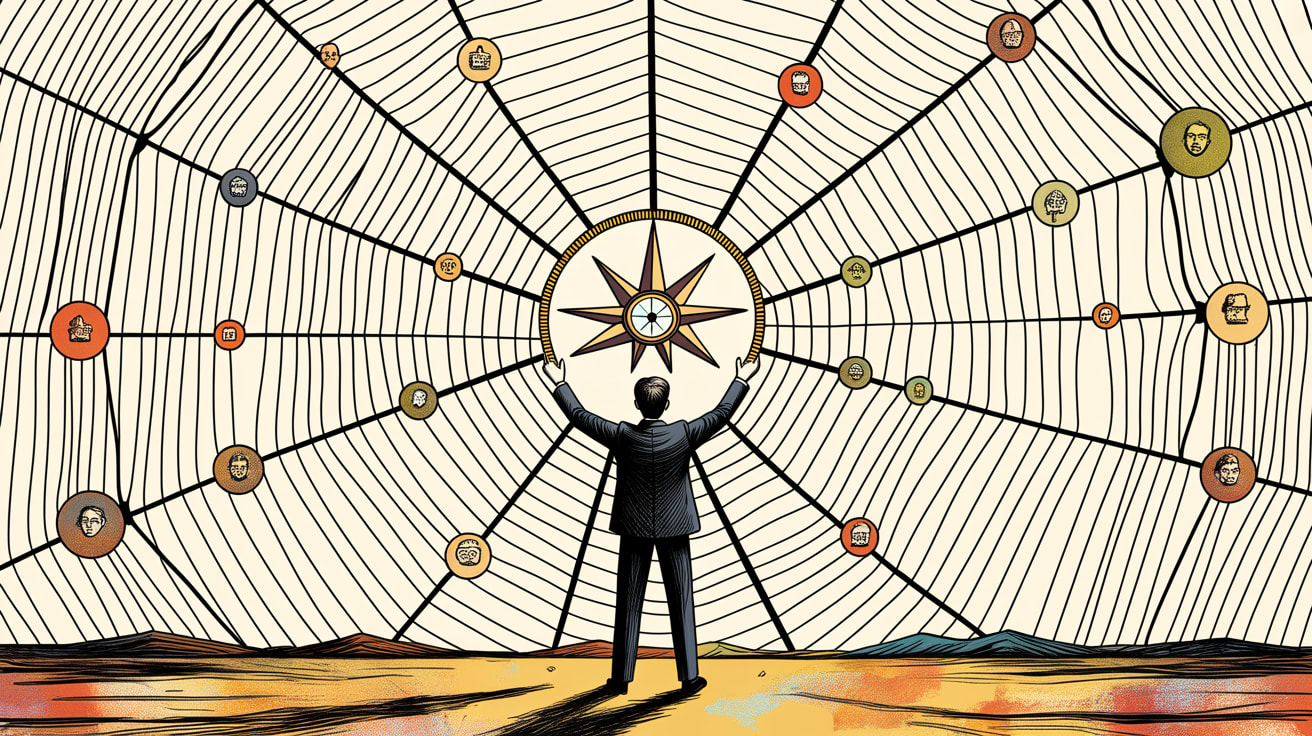
Search Engine Journal’s coverage of Google’s Open Knowledge Format (OKF) puts a name to something that’s been quietly reshaping crawl behaviour: Google is increasingly treating websites less like collections of pages and more like linked graphs of concepts, entities, and relationships. OKF essentially gives that graph a standardised language — one that AI agents can traverse without needing to interpret prose.
For SEA brands, this has an immediate structural implication. Sites that rely on narrative-dense category pages or unlinked product descriptions are presenting machines with ambiguity at exactly the moment machines are being asked to make authoritative decisions. A Thai e-commerce brand that explicitly links its product entities to ingredient origins, certifications, and use-case contexts is building a graph. One that publishes 800-word blog posts with no internal entity relationships is building a dead end.
Implementation doesn’t require a full schema overhaul overnight. Start with entity disambiguation: ensure every significant concept on your site — brand names, product categories, locations, people — is consistently named, cross-referenced, and ideally anchored to an external knowledge base like Wikidata. That’s table stakes for machine legibility.
Self-Promotional Content Works — Right Up Until AI Decides It Doesn’t Trust You
Ahrefs published a genuinely useful experiment this month examining how AI systems respond to self-promotional content. The findings are worth sitting with. Glen Allsopp’s analysis of 750 ChatGPT prompts found that “best [category]” listicle formats are among the most frequently cited source types in AI-generated answers — meaning the content format works. But Ahrefs’ own experiment introduced a critical caveat: AI systems show measurable sensitivity to credibility signals surrounding that content. Self-promotion that lacks third-party corroboration — independent reviews, external citations, community mentions — gets filtered out.
This isn’t a new idea dressed in new clothes. It’s the E-E-A-T doctrine applied to generative AI pipelines. What’s changed is the enforcement mechanism. A human editor might skim past thin credibility; an AI model running pattern-recognition across thousands of sources will systematically discount it. For brands investing in Answer Engine Optimisation, the implication is clear: your owned content is the pitch, but your earned mentions are the proof. In Southeast Asia, where Shopee reviews, LINE community discussions, and regional tech press carry significant authority signals, building that corroboration layer is both achievable and underutilised.
Google Ask Maps Is Rewriting Local Discovery in Real Time
Google’s Ask Maps feature — covered in detail by SEO.com — represents the most significant shift in local search UX since the Local Pack emerged. Instead of returning a list of businesses, Ask Maps allows users to pose natural-language queries directly within Maps and receive AI-synthesised responses that reference specific businesses, attributes, and reviews.
For local businesses across Southeast Asia, the stakes are high and the playbook is still being written. What’s clear from early behaviour is that Ask Maps draws heavily on review content, business attributes, and Q&A data — not just proximity and ratings. A restaurant in Jakarta that has comprehensively answered “do you have private dining rooms?” in its Google Business Profile Q&A section will surface in Ask Maps responses to that query. One that hasn’t answered it simply won’t exist in that context, regardless of how many five-star reviews it holds.
Platform ecosystems add a layer of complexity unique to the region. Grab and Line’s local discovery features operate on similar conversational-query logic, and the brands winning local visibility in 2026 are those maintaining consistent, attribute-rich listings across all three surfaces — not just Google. Multilingual accuracy matters here too: a business listing that handles Thai, Bahasa Indonesia, and English inconsistently sends conflicting signals to the very systems now synthesising answers about it.
Google’s Spam Detection Is Now Pattern-Level — Not Content-Level
Semrush’s coverage of recent Google research on AI video spam detection reveals something instructive beyond the video context. Google’s new detection methodology clusters accounts and behavioural patterns — not individual pieces of content. In other words, the question is no longer just “is this piece of content manipulative?” but “does this entity exhibit the systemic patterns of a manipulative publisher?”
This is the logical extension of how Google has been moving for several years, now applied to AI-generated content at scale. For legitimate brands, it’s actually good news — genuine editorial consistency and publishing behaviour is precisely what differentiates you from churn-and-burn AI content farms. But it’s a warning for brands that have been opportunistically flooding their blogs with AI-generated posts to capture keyword clusters. The signal isn’t the content quality of any single article. It’s the pattern across your entire publishing history.
SEA marketing teams running content at volume — which is common across the region’s aggressive performance marketing culture — should audit their publishing patterns now, before a pattern-level penalty creates a much harder recovery problem.
The question worth sitting with: If AI systems now decide citation-worthiness based on entity relationships, corroboration signals, and publisher patterns rather than keyword density, what does your brand’s machine-readable reputation actually look like — and who in your organisation is responsible for building it?
At grzzly, we help Southeast Asian brands build search visibility that’s designed for how machines actually make decisions in 2026 — from knowledge graph architecture to local listing optimisation across Grab, LINE, and Google. If your search strategy was built for an older version of the internet, it’s worth a conversation. Let’s talk
Sources

Written by
Cosmic GrizzlyMapping the evolving cosmos of search — from traditional SERP dominance to answer engine optimisation and AI-cited authority. Obsessed with how machines decide what the world deserves to read.