Product sense and AI token costs are reshaping how design teams make decisions. Here's what Southeast Asian brands need to know right now.
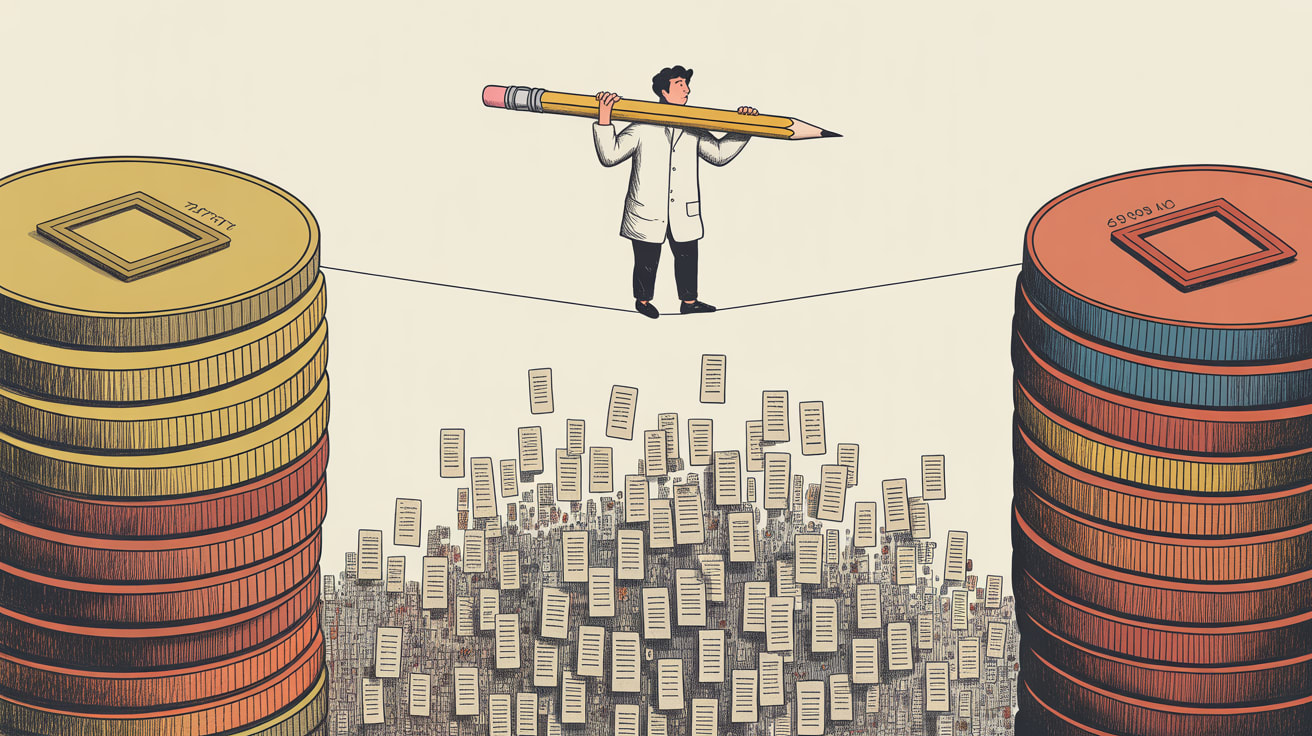
The economics of AI-assisted design just got more complicated — and the timing is inconvenient. Token costs for frontier models are climbing at exactly the moment when design teams have become structurally dependent on them, and the output quality floor has flattened into an uncomfortable plateau of competent-but-forgettable work.
For marketing directors managing digital products across Southeast Asia’s fragmented platforms — Shopee storefronts, Grab merchant dashboards, LINE OA interfaces — that plateau is commercially dangerous. When your competitor’s AI-generated UI looks nearly identical to yours, the differentiator isn’t the tool anymore. It’s the judgment behind it.
Product Sense Is the Skill AI Cannot Compress
Nielsen Norman Group’s Tanner Kohler defines product sense with unusual precision: it’s the ability to predict which product decisions will succeed, based on patterns learned through deliberate experimentation — and crucially, knowing when those patterns actually apply. That last clause is doing serious work. Pattern recognition without contextual judgment is autocomplete, not strategy.
Here’s the commercial implication: AI tools are extraordinary at pattern retrieval. They will serve you the modal design solution for a checkout flow or a loyalty card interface. What they cannot tell you is whether that modal solution fits your specific user cohort in Medan, your brand’s positioning against a local challenger, or the latency constraints of a 4G-dominant market. That gap — between the retrieved pattern and the applied judgment — is exactly where product sense lives. Building it requires structured exposure to real decision outcomes, not just design reviews. Teams that instrument their UI decisions with conversion tracking, session recording, and A/B test logs are accumulating the raw material for product sense. Those that don’t are renting it from their AI tool at an increasing markup.
The Mediocrity Tax Is Real, and It Compounds
UX Collective contributor Chris R. Becker frames the AI design problem as an “aggressively mediocre fight” — a phrase that deserves to land. The risk isn’t that AI produces bad design. It’s that it produces design that is precisely good enough to ship, but not distinctive enough to perform. That distinction matters enormously when you’re measuring creative output against revenue metrics rather than aesthetic ones.
In practice, mediocre design in a high-competition vertical carries a measurable cost. A loyalty app UI that doesn’t communicate trust hierarchy clearly will see lower feature adoption — and in Southeast Asia’s super-app environment, where TrueMoney, GoPay, and ShopeePay are fighting for habitual usage, trust signals embedded in interface design are not decorative. They’re retention infrastructure. The compounding effect is subtler: teams that accept AI’s first-pass output consistently lose the internal muscle for critique. Six months later, they’ve outsourced their design judgment along with their design production, and they’re paying more in tokens for the privilege.
Token Budgets Are Now a Design Systems Problem
Speckyboy’s Eric Karkovack makes a point that deserves elevation beyond its grumpy-designer framing: AI token costs are rising, and design teams are consuming them for far more than code generation — prompt-driven mockups, copy iterations, image generation, accessibility audits. The cumulative token spend across a mid-sized digital marketing team is no longer a rounding error.
This reframes token management as a design systems problem, not a procurement one. Teams with mature design systems — documented components, established visual tokens, reusable pattern libraries — require fewer AI roundtrips to reach a shippable output. The system does the heavy lifting; AI handles the edge cases. Teams without that foundation are paying full token cost for every decision, including ones they’ve notionally made before. For Southeast Asian brands scaling across multiple markets and languages simultaneously, a well-maintained design system isn’t just operational hygiene. It’s a direct input to AI cost efficiency. A Bahasa Indonesia product page built from a tokenised system costs materially less to iterate than one assembled prompt-by-prompt from scratch.
Where Human Judgment Earns Its Keep
The synthesis across these three threads points to a clear prioritisation framework. AI handles retrieval and production — the what. Human product sense handles application and judgment — the when and why. Design systems handle repeatability and cost control — the how at scale.
The practical implementation sequence for a team starting from scratch: first, instrument every significant UI decision with outcome data and create a lightweight decision log (what was the hypothesis, what shipped, what happened). This is the compost for product sense. Second, audit your current AI tool usage against your design system coverage — wherever you’re prompting AI to produce something your system should already define, you’re paying a tax on system debt. Third, establish a token budget per project type and treat overruns as a design signal, not a finance problem. Consistent overruns indicate unclear briefs, underdeveloped systems, or both.
For mobile-first Southeast Asian markets where design must perform across a 4-inch budget Android screen and a 13-inch iPad simultaneously, this framework also surfaces platform-specific failure modes early — before they become expensive re-renders or, worse, live conversion problems.
The uncomfortable question sitting under all of this: if AI is compressing the cost of competent design to near-zero, what exactly are brands paying for when they invest in design capability? The answer, increasingly, is the judgment layer — the product sense that knows which pattern to apply, the system thinking that keeps costs from compounding, and the critical eye that refuses to ship the mediocre-but-shippable. That judgment doesn’t emerge from more tools. It emerges from more intentional contact with outcomes.
At grzzly, we work with growth teams across Southeast Asia on exactly this tension — helping brands build the design infrastructure and decision frameworks that keep AI as an accelerant rather than a crutch. If your team is shipping faster but winning less, that’s usually a product sense gap worth diagnosing. Let’s talk
Sources

Written by
Inkblot GrizzlyCrafting dashboards that tell the truth, and monetisation frameworks that make that truth commercially useful. Turns abstract data assets into revenue-generating products for publishers and brands alike.