Open design culture isn't a feelings exercise — it's a structural challenge. Here's how to build the feedback loops that turn design decisions into business intelligence.
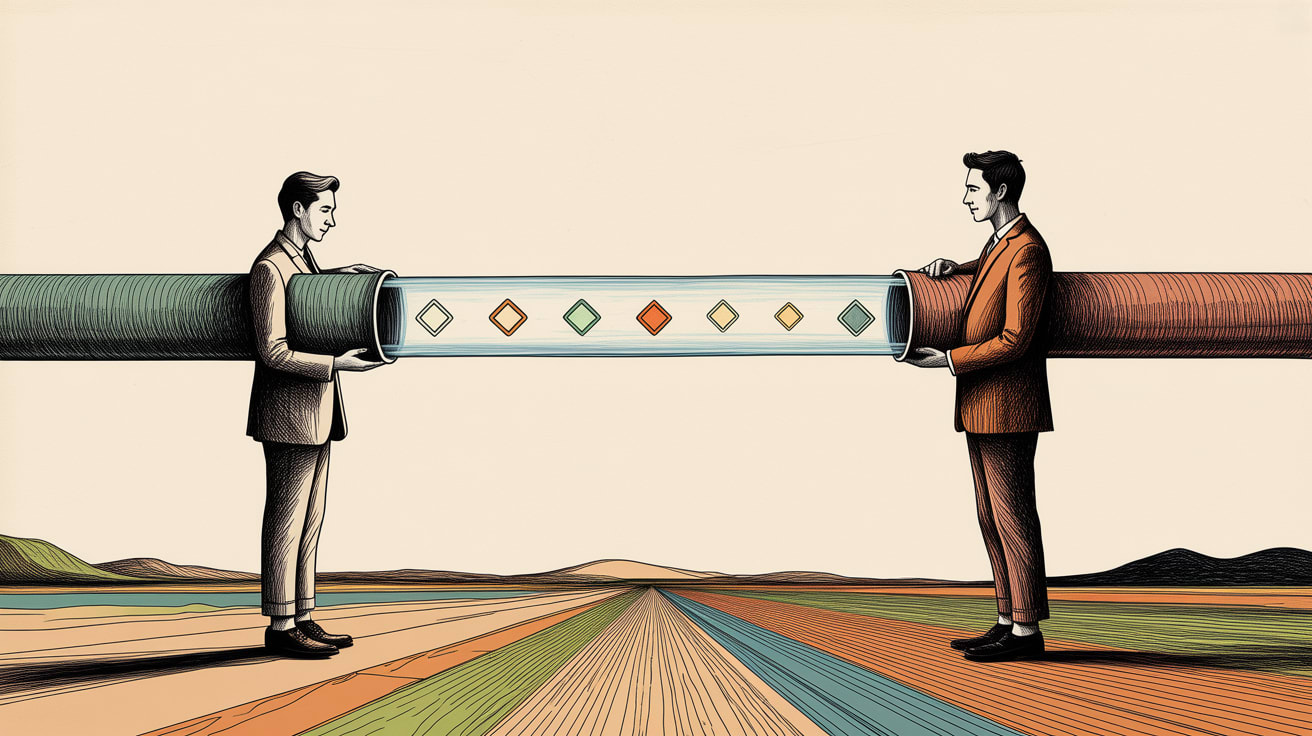
Most design culture conversations get filed under HR concerns — morale, inclusion, psychological safety. Important, yes. But framing it as a people problem misses the structural issue underneath. A closed design culture is fundamentally a bad data pipeline. Decisions flow in one direction, feedback never completes its loop, and the organisation ends up optimising against intuitions rather than evidence.
For marketing and growth teams across Southeast Asia — where design must simultaneously perform on Shopee PDPs, LINE OA banners, TikTok pre-rolls, and low-bandwidth mobile web — the cost of that closed loop isn’t philosophical. It shows up directly in conversion rates.
Psychological Safety Is Just a Feedback Schema
Kai Wong’s piece on UX Collective makes a point that deserves more traction: you don’t need a leadership title to build psychological safety in a design team. What you do need is consistent, structured moments where critique is separated from judgment. That’s not soft management theory — that’s schema design for human systems.
Think about what actually breaks in a closed design culture. A junior designer notices that the CTA button on a Lazada storefront is visually competing with the product image on mid-range Android devices. They say nothing, because the last time someone flagged a similar issue, it became a territorial debate about who owns the component. The problem ships. Conversion on that SKU underperforms by 12%. Nobody connects the dots.
Open cultures create the conditions where that observation surfaces, gets tested, and closes the loop back to the person who raised it. The mechanism matters more than the mandate. A weekly 20-minute “what broke and what we learned” ritual — no hierarchy, no attribution — does more for design quality than a culture deck ever will.
Creative Ownership Changes What Gets Designed
There’s a longer structural tension worth naming here. Kathy Pham’s reporting on Artist Corporations — a new legal structure prioritising IP protection and creative mission over corporate profit — surfaces something the design industry has been quietly circling for years. When designers don’t own their creative output, they optimise for approval rather than outcomes.
This matters more in Southeast Asia than most markets acknowledge. Regional agency talent is frequently producing work that ends up owned entirely by the client, with no credit, no portfolio rights, and no feedback on whether it worked. The incentive structure produces competent execution and suppresses creative risk. A-Corps, as Pham notes, aren’t a quick fix — they’re structurally complex and legally nascent. But the principle they encode is sound: creative agency produces better work when it has genuine stakes in the outcome.
For in-house teams, the practical translation is simpler. Give designers visibility into the downstream performance of their work. Not as a accountability mechanism, but as a data return. A designer who sees that their revised onboarding flow lifted Day-7 retention by 8% on the Grab-like app they work on has a fundamentally different relationship with their next design decision than one who ships into a void.
Infinite Canvas, Finite Attention: What New Tools Reveal About Design Thinking
Smashing Magazine’s profile of Kirki — WordPress’s first freeform visual builder with an infinite canvas — is interesting less for the product itself and more for what it signals about how design tooling is evolving. The move away from grid-constrained boxes toward spatial, freeform composition mirrors a broader shift: design systems are mature enough now that the constraints have moved from the tool level to the system level.
For Southeast Asian marketing teams managing multi-platform campaigns, this has a concrete implication. The old argument for rigid templates — “we need consistency across 47 banner formats” — is increasingly solved at the design token and component level, not the canvas level. That means creative teams can reclaim compositional freedom without sacrificing brand coherence, provided the underlying system is well-architected.
The failure mode to avoid: adopting freeform tools without having the design system infrastructure to support them. An infinite canvas in the hands of a team without shared typography scales, colour token discipline, or responsive breakpoint logic doesn’t produce creative freedom — it produces visual entropy. Kirki’s zero-plugin-dependency approach and cleaner performance profile are genuine advantages, but they’re table stakes compared to the organisational readiness question.
If your team is considering a move to more spatially flexible tooling, the honest prerequisite checklist is short: Do you have documented design tokens? Do your components have clear ownership? Do you have a review process that catches brand drift before it ships? If the answer to any of those is no, the canvas size is not your constraint.
Connecting Culture to Conversion
Here’s the thread that ties these three signals together. Open design culture, creative ownership, and flexible tooling are all, at their core, about improving the quality and speed of signal flow through a design organisation. Closed cultures filter signal. Misaligned ownership distorts it. Rigid tools compress it.
The organisations that are winning on conversion in Southeast Asian digital commerce — think Pomelo’s mobile-first product pages, or Sea Group’s iterative approach to Shopee’s browse experience — are not winning because they have better designers. They’re winning because their design decisions are connected to outcome data, their teams surface problems early, and their tooling supports iteration without ceremony.
That’s not a culture initiative. That’s infrastructure.
Key Takeaways
- Build structured critique rituals at the team level — a 20-minute weekly retrospective with no hierarchy costs nothing and creates the feedback loops that closed cultures systematically suppress.
- Give designers direct access to the downstream performance metrics of their work; ownership of outcome data changes incentive structures more reliably than ownership of IP alone.
- Before adopting freeform design tooling, audit your design system maturity — tokens, component ownership, and brand review processes must precede canvas freedom, or you’re trading one constraint for chaos.
The question Southeast Asian marketing teams should be sitting with isn’t “how do we build a better design culture?” It’s “what is the current cycle time between a design insight and a shipped change — and what’s breaking that loop?” Culture is often the symptom. The pipeline is usually the problem. Fix the infrastructure, and the culture tends to follow.
At grzzly, we work with growth and marketing teams across Southeast Asia to build the data and design infrastructure that connects creative decisions to measurable outcomes — not just dashboards, but genuine feedback loops. If your team is shipping into a void and wondering why design quality feels unpredictable, we’ve seen that pattern before. Let’s talk.
Sources
- https://uxdesign.cc/how-any-designer-can-build-a-more-open-design-culture-at-work-e74e0925d781?source=rss----138adf9c44c---4
- https://www.itsnicethat.com/articles/pov-a-corps-artist-corporations-creative-industry-070726
- https://smashingmagazine.com/2026/07/kirki-wordpress-visual-builder-infinite-canvas/

Written by
Chunky GrizzlyDesigning the foundational plumbing — data warehouses, lakehouse models, and ETL pipelines — that separates organisations with genuine intelligence from those drowning in dashboards.