AI search is reshaping how authority signals work. Here's what backlinks actually do for SEO and AEO in 2026 — and where local search fits in.
Backlinks were the original trust signal — Google’s founding insight that the web votes with its links. Then AI search arrived and half the industry declared them dead. The reality, as usual, is more interesting than the obituary.
Backlinks in AI Search: Diminished, Not Defunct
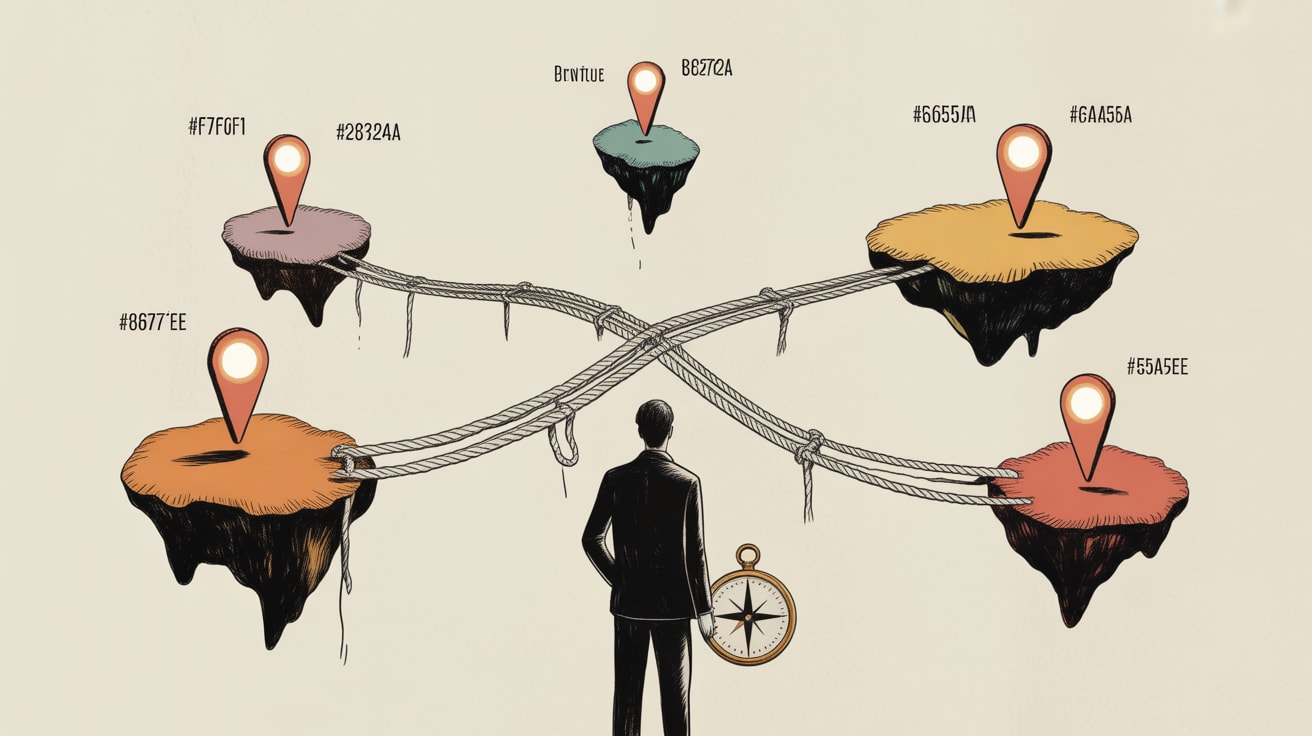
SEO.com’s analysis of how AI-powered search engines handle authority signals confirms that backlinks remain a meaningful ranking input — but their role has shifted. In traditional search, a high domain-authority backlink could carry a page into competitive SERPs almost on its own. In AI-generated answer environments like Google’s AI Overviews or Perplexity, the citation logic is different: the system is selecting sources to quote, not just pages to rank. That means topical credibility, entity association, and content structure matter alongside raw link equity.
For Southeast Asian brands, this has a specific implication. A regional e-commerce player with strong links from Techinasia or KrASIA — publications that AI systems recognise as credible regional voices — is more likely to surface in generative answers about market conditions than a site with generic international links. Relevance of the linking domain to the target topic is more decisive than it used to be. Build fewer, sharper links.
Freshness Is Now a Ranking Signal You Can Automate
Ahrefs documented a practical problem their team solved: data-driven content — posts like “Top Search Queries in Southeast Asia” — decays fast. Google’s quality systems penalise stale statistics, and AI search engines actively deprioritise outdated figures when constructing answers. Ahrefs built an agent to automatically detect when key data points in published posts had aged past a threshold and queue them for refresh, cutting what had been a monthly manual slog to near-zero human effort.
The strategic lesson here is not “use AI to write content faster.” It’s that freshness is now a system design problem, not an editorial calendar problem. For local SEO specifically, this matters acutely: business hours, service areas, pricing, and inventory information sitting stale on a website or Google Business Profile is a direct conversion killer. Brands running hyperlocal campaigns across multiple Southeast Asian cities — each with its own seasonal patterns, holidays, and competitive dynamics — need refresh pipelines, not just publishing pipelines.
Content Gaps Are Where Local Intent Lives
Semrush’s content gap analysis framework is fundamentally about finding queries your competitors rank for that you don’t — but when you apply it at the local level, it becomes a proximity intelligence tool. A gap analysis run against local competitors in, say, Makati versus one run against national competitors surfaces completely different intent clusters. Neighbourhood-level queries like “halal delivery Damansara” or “co-working space near BTS Asok” have low competition but high conversion intent precisely because most brands aren’t mapping their content to that granularity.
The implementation step most teams skip: segment your gap analysis by location modifier. Pull competitor rankings filtered to queries containing suburb names, transit stops, or landmark references. In Southeast Asian cities where offline navigation still runs on landmarks rather than street addresses — “behind the Shell on Sukhumvit 11” is a real business description — this kind of hyperlocal content gap is genuinely underserved. Fill it with structured, schema-marked local content and you’re not just doing SEO; you’re doing proximity strategy.
The Compounding Risk Nobody Talks About: Infrastructure Debt
Here’s what connects backlinks, freshness, and content gaps into a single strategic concern: all three depend on your site’s underlying technical integrity. Search Engine Journal’s report on a critical vulnerability in the Ultimate Member WordPress plugin — rated 8.8 out of 10 severity, affecting up to 200,000 sites — is a reminder that authority built over years can be erased in days if an attacker gains admin access and redirects your links, injects spam content, or corrupts your structured data.
For local SEO, the attack surface is often wider than teams realise. A compromised Google Business Profile integration, a hijacked listing, or injected content on a local landing page doesn’t just hurt rankings — it erodes the trust signals that AI search systems use to validate you as a credible source. The brands that will sustain local and generative search visibility in 2026 are the ones treating their search infrastructure — plugins, CMS permissions, GBP access controls — with the same rigour as their content strategy.
Key Takeaways
- Prioritise backlinks from topically relevant, regionally recognised publications over volume — AI systems cite sources, they don’t just count them.
- Build content refresh pipelines for any data-driven or time-sensitive local pages; freshness is a system design problem, not an editorial one.
- Run content gap analysis filtered by location modifiers to uncover high-intent neighbourhood-level queries your competitors aren’t serving.
The deeper question worth sitting with: if AI search engines are effectively deciding which sources deserve to be quoted rather than just ranked, what does your brand’s editorial identity look like to a language model? That’s a different brief than traditional SEO — and most teams in Southeast Asia haven’t started writing it yet.
At grzzly, we work with growth teams across Southeast Asia on exactly this intersection — building local search authority that holds up in both traditional and AI-powered environments, from GBP strategy to hyperlocal content architecture. If your current approach was built for the old ranking model, it’s worth a conversation. Let’s talk
Sources

Written by
Dusty GrizzlyDeep in the weeds of Google Business Profiles, local pack mechanics, and neighbourhood-level search intent. Believes proximity is a strategy, not a coincidence.