From Bluesky's rise to ad fraud crackdowns, digital strategy in 2026 demands sharper platform thinking. Here's what Southeast Asian brands need to know.
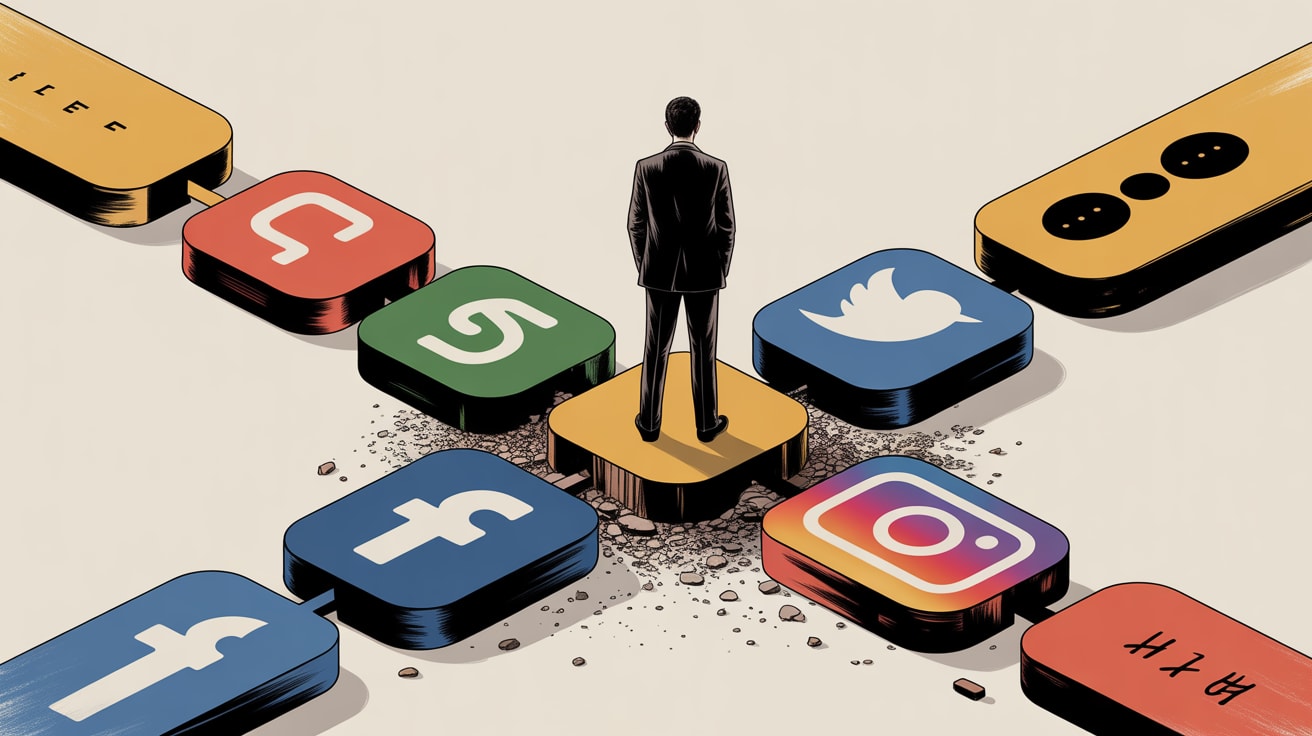
Three things happened in the same week that, taken together, say something important about where digital strategy is heading: agency holding companies started sounding optimistic again, Bluesky quietly became a platform worth a serious brief, and regulators moved to legally force ad platforms to remove bad actors. None of these is a trend in isolation. Together, they sketch a clear strategic direction — trust is becoming the scarcest resource in digital marketing, and the brands building for it now will be difficult to displace.
Why the Agency Confidence Shift Actually Matters for Brand Strategy
Havas CEO Yannick Bolloré told Campaign Live that client and investor perceptions of agencies have “flipped” — from skepticism to renewed appreciation. His explanation is worth unpacking strategically: the complexity of the current channel landscape has outrun what most in-house teams can manage alone. AI tools, platform fragmentation, first-party data architecture, and regulatory compliance don’t operate in neat silos. They interact constantly.
For marketing directors in Southeast Asia, this should prompt an honest internal audit. The brands that pulled strategy fully in-house during the efficiency push of 2022–2024 are now managing enormous coordination costs — separate vendors for paid media, SEO, creative, analytics, and martech, with no single point of synthesis. The pendulum isn’t swinging back to traditional agency models, but it is swinging toward integrated strategic partnership. The question isn’t whether to use external expertise — it’s how to structure it so you retain strategic ownership without being stranded in execution complexity.
Bluesky Is a Platform Brief, Not a Trend Piece
Sprout Social’s comprehensive Bluesky strategy guide lands at the right moment. The platform’s community-first architecture — particularly its user-controlled Feeds system — creates a fundamentally different discovery environment than X or Threads. Brands don’t algorithmically carpet-bomb their way into relevance here. They earn placement in curated Feeds by producing content that community moderators and users actually want to include.
For Southeast Asian brands, this is worth watching but requires calibration. Bluesky’s current user base skews toward English-language, tech-adjacent, and Western markets. LINE, Telegram, and TikTok still dominate the engagement volume conversation across Thailand, Indonesia, Vietnam, and the Philippines. But Bluesky’s model — decentralised, transparent, low-ad-noise — is the canary for where platform design is heading as users grow exhausted by algorithmic manipulation. Brands that experiment with genuine community-building on Bluesky now will develop muscle memory that transfers directly to whatever comes next in the region.
Practical starting point: identify one subject matter niche where your brand has genuine expertise, create content designed to be Feed-worthy rather than just scroll-stopping, and measure engagement quality over volume. The metrics look different here — and that’s the point.
Ad Platform Accountability Is No Longer Voluntary
Ofcom’s proposed rules — requiring tech platforms to legally ban bad actors posting scam ads and block them from creating new accounts — represent a structural shift in platform governance that marketing teams should not file under “regulatory compliance” and ignore. Campaign Live reported that industry bodies called it “a welcome step in the right direction,” which is polite language for “this was overdue by several years.”
The strategic implication for brands runs deeper than brand safety checklists. When regulators start mandating platform-level accountability, platforms respond by tightening their own ad quality standards — because the alternative is liability. That means the permissive environment where low-quality creative and aggressive targeting could fly under the radar is tightening. In Southeast Asia, where cross-border ad fraud has been a persistent drain on performance budgets (particularly on open programmatic networks), this direction of travel is significant even if Ofcom’s direct jurisdiction is the UK.
Shopee, Lazada, and regional ad networks are not immune to pressure from the same institutional investors and brand partners now demanding accountability from Meta and Google. Brands with rigorous creative standards, first-party audience data, and clean attribution models will find their media efficiency improving as platforms clean house. Brands still relying on cheap impressions and volume targeting will face margin compression.
The Coherent Thread: Strategic Coherence Over Channel Tactics
These three developments converge on a single strategic truth that experienced practitioners have known for a while but that quarterly planning cycles tend to obscure: channel tactics without strategic coherence are increasingly expensive and increasingly fragile.
Agencies are valuable again because strategic coherence is hard to manufacture at speed. Bluesky rewards brands with a clear point of view that doesn’t need algorithmic amplification to find its audience. Ad platform regulation penalises brands that treated media buying as a volume game disconnected from brand standards. The brands that will navigate 2026 well are the ones treating digital strategy as a unified discipline — where channel selection, creative quality, audience intelligence, and brand positioning are made by the same people in the same room, not handed off across a fragmented vendor map.
For growth leads and marketing directors across Southeast Asia, the useful provocation is this: if your current digital strategy could survive losing any single platform tomorrow, you probably have strategic coherence. If the answer is “we’d lose 60% of our leads” — that’s not a channel dependency, that’s a strategy debt that’s accruing interest.
Key Takeaways
- Audit your platform dependency ratio now — if one channel failure would break your growth model, that’s a structural problem, not a media mix problem.
- Treat Bluesky as a low-cost laboratory for community-first content strategy, even if it isn’t a primary channel yet in your markets.
- Tightening ad platform governance favours brands with strong creative standards and first-party data — invest there before the margin compression arrives.
The deeper question worth sitting with: in a media environment where trust is increasingly scarce and platform rules increasingly strict, what does your brand actually stand for well enough that audiences would seek it out without algorithmic help? That’s not a brand awareness question. That’s your entire digital strategy question.
At grzzly, we help mid-to-large brands across Southeast Asia build digital strategies that hold up when platforms shift — connecting channel intelligence, audience data, and creative coherence into growth systems that don’t depend on any single algorithm’s goodwill. If the themes here are live questions in your organisation right now, Let’s talk.
Sources

Written by
Vintage GrizzlySynthesising channel intelligence, audience psychology, and market context into coherent growth strategies. Old enough to remember the last paradigm shift; sharp enough to see the next one forming.