Your archived design assets are being repurposed as AI substrate. Here's what that means for UX strategy, brand consistency, and your design system in SEA.
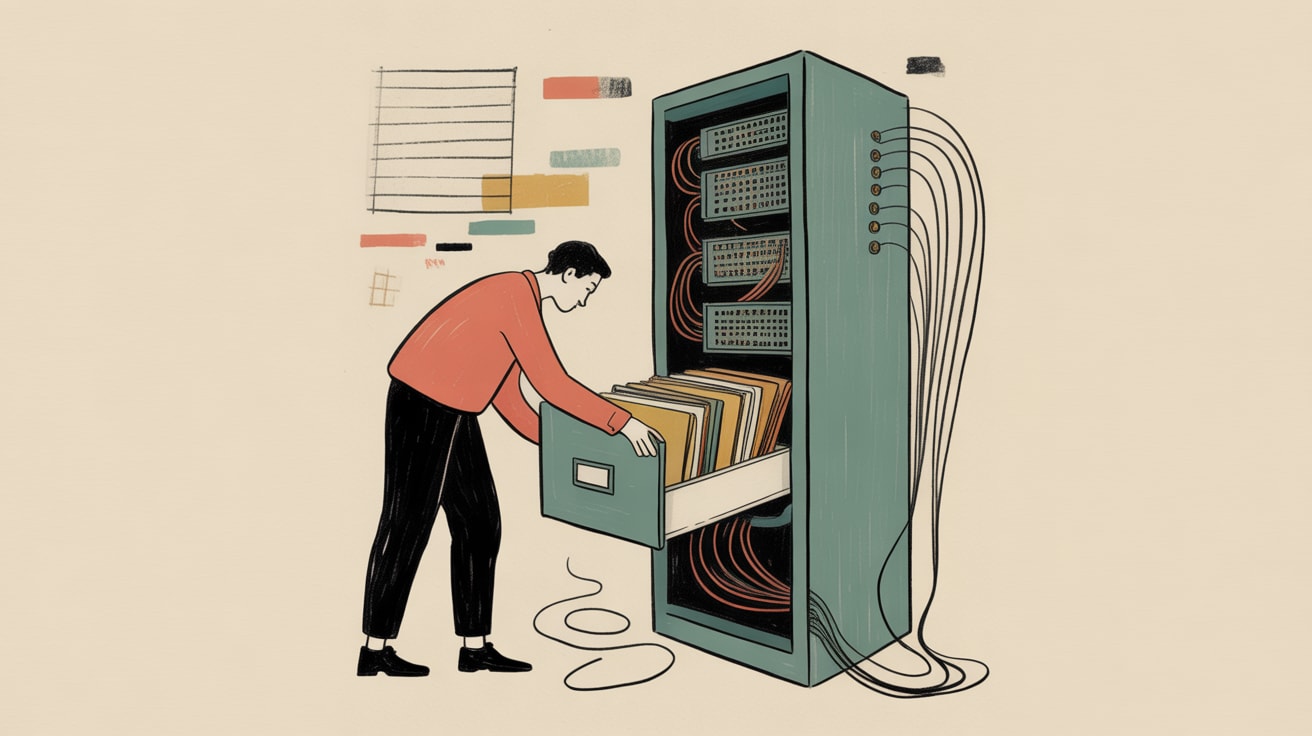
The average marketing team treats its design archive like a filing cabinet: organized, inert, occasionally raided for an old logo. Adrian Levy’s provocation in UX Collective reframes that assumption entirely — your files aren’t stored assets anymore, they’re active substrate feeding AI tooling, generative workflows, and decisioning systems whether you’ve sanctioned it or not.
For a data strategist, this lands differently than it does for a creative director. It’s not primarily a creative question. It’s a data governance and brand integrity question with real conversion implications.
Your Archive Is Already an Input, Not an Output
Here’s the structural shift Levy is pointing at: design files have historically been outputs — artefacts produced at the end of a creative process. AI-assisted workflows have inverted that. Tools like Figma’s AI features, Adobe Firefly trained on licensed assets, and internal generative pipelines now treat existing design libraries as training inputs that shape future outputs.
For Southeast Asian brands operating across multiple storefronts — Shopee, Lazada, Tokopedia — this has an immediate practical consequence. If your archived banner templates, product card designs, and promotional layouts are feeding an AI generation layer, inconsistencies you tolerated historically (a slightly off-brand CTA colour on a 2023 Harbolnas campaign, a localised font substitution for Bahasa Indonesia copy) become codified patterns. The model learns the exception as the rule.
The fix isn’t aesthetic — it’s taxonomic. Audit your design library not for visual quality but for data quality: which assets reflect current brand standards, which are deprecated variants, and which were one-off market adaptations that shouldn’t propagate.
The Build-vs-Buy Decision Has a Design Parallel
Speckyboy’s Eric Karkovack makes a measured case about WordPress plugin decisions in the AI era — install an existing solution or generate your own with AI assistance? The underlying logic maps cleanly onto design system decisions that marketing teams face right now.
The question isn’t whether AI can generate a custom component. It’s whether that custom component will survive contact with your broader design system, your development pipeline, and the next person who inherits the codebase. Karkovack’s framework — scope, flexibility, long-term maintenance — is exactly the right lens.
Applied to design: a vibe-coded custom UI pattern generated for a one-off campaign landing page carries genuine short-term efficiency gains. But if that pattern gets absorbed into a shared component library without proper documentation, you’ve introduced technical debt with a design face. For teams running multi-market campaigns across Thai, Vietnamese, and Filipino audiences simultaneously, that debt compounds fast — especially when multilingual text-length variations break layouts that were only ever tested in English.
Human Craft as a Measurable Differentiator
The Cannes Nicer Tuesdays lineup — analogue illustration, short-form filmmaking, genre-defying branding — reads as a deliberate counterweight to the substrate conversation. Not nostalgia. Strategy.
When generative AI compresses the cost of producing competent design to near-zero, the differentiation value of visually distinctive, hand-crafted creative increases. This is basic supply-demand logic applied to attention economics. If every mid-tier brand in your category is running AI-generated hero imagery with similar aesthetic signatures (because they’re drawing from similar model weights), the brand that invests in genuinely idiosyncratic visual identity earns disproportionate recall.
The data supports this directionally. Distinctive brand assets — defined by the Ehrenberg-Bass Institute as assets that are both famous and unique to the brand — drive significant purchase probability uplift independent of messaging. In high-frequency mobile environments like LINE feeds and TikTok Shop, where a user makes a recognition decision in under 300 milliseconds, distinctiveness isn’t a creative luxury. It’s a conversion variable.
The practical implication: reserve human creative investment for the brand elements that need to be un-replicable — brand characters, signature illustration styles, campaign-defining visual language. Let AI handle the production scaling. Don’t let it handle the originality.
Governance Before Generation
The thread connecting all three of this week’s signals is the same: teams that treat design as a managed data system will outperform teams that treat it as a creative output queue.
Practically, that means three things. First, establish a single source of truth for brand assets with clear versioning and deprecation tagging — not just for designer convenience, but because AI tools will ingest whatever they can access. Second, apply the build-vs-buy discipline to every new UI component or design pattern: is the maintenance cost of a custom solution lower than the integration cost of an existing one at your scale? Third, ring-fence the creative work that must stay human — not as a philosophical stance, but as a brand differentiation investment with a measurable ROI case behind it.
For Southeast Asian marketing teams managing campaigns across five languages and four major e-commerce platforms simultaneously, getting this governance architecture right isn’t optional. The brands that do it in the next 18 months will have a structural creative and data advantage that compounds. The ones that don’t will be very efficiently producing a lot of content that looks exactly like everyone else’s.
The real question isn’t whether your design files have become substrate. They have. The question is whether you’re the one deciding what they teach.
Key Takeaways
- Audit your design archive for data quality, not just visual quality — deprecated or inconsistent assets will propagate through AI generation pipelines if left untagged.
- Apply a scope-flexibility-maintenance framework before generating custom UI components with AI; short-term efficiency gains can create long-term design system debt.
- Invest human creative effort in the brand elements that need to be genuinely distinctive — in high-frequency mobile environments, distinctiveness is a conversion variable, not a creative preference.
As generative tooling continues to compress production costs, the competitive moat shifts from execution speed to governance quality and creative distinctiveness. The brands worth watching in SEA over the next two years won’t necessarily be the fastest adopters of AI design tools — they’ll be the ones who figured out which decisions to keep human, and why.
At grzzly, we work with marketing and brand teams across Southeast Asia to build the data infrastructure and creative frameworks that let both sides of this equation — AI efficiency and human distinctiveness — actually coexist. If you’re trying to figure out where your design system ends and your data strategy begins, that’s exactly the conversation we’re built for. Let’s talk
Sources

Written by
Mellow GrizzlyTranslating raw data into activated audience segments, predictive models, and decisioning logic. Comfortable at the intersection of the data warehouse and the campaign manager.