Psychological safety, creative ownership, and freeform design tools share one root cause. Here's how to build design culture that actually scales in Southeast Asia.
Three things landed in my feed this week that, on the surface, have nothing to do with each other: a piece on building psychological safety in design teams, a deep-dive on Artist Corporations as a new IP ownership model, and a launch post for Kirki — WordPress’s first infinite-canvas visual builder. Different topics. Same underlying tension.
All three are really about the same problem: creative work keeps getting constrained by structures that were never designed for it. And the organisations winning on design right now are the ones treating that as an infrastructure problem, not a culture problem.
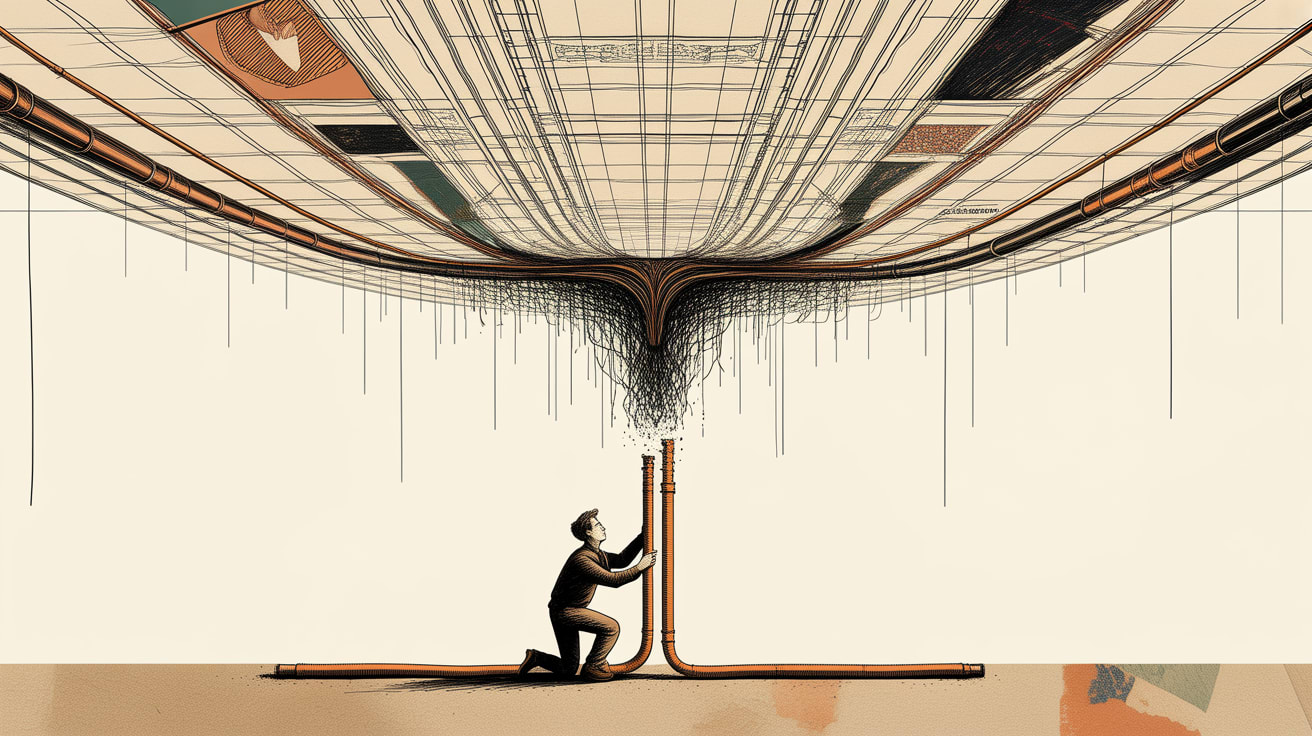
Psychological Safety Is a Plumbing Problem, Not a Personality One
Kai Wong’s piece on UX Collective makes a point that should be obvious but rarely is: you don’t need a leadership title to build psychological safety on a design team. What you need is to systematically lower the cost of being wrong in public.
From a data infrastructure perspective, this maps cleanly. A team drowning in dashboards isn’t suffering from a data problem — it’s suffering from a trust problem. Nobody wants to surface an insight that contradicts the CEO’s pet assumption, so the insight never gets surfaced. Same dynamic in design crits: if the feedback loop is punishing, designers stop putting rough work on the table, and the quality of final output quietly degrades.
The practical fix is structural, not motivational. Wong points to specific rituals — rotating crit facilitators, anonymous feedback rounds, explicit norms around separating idea critique from personal critique. These aren’t culture initiatives. They’re scaffolding. You build them once, and the behaviour change follows. For Southeast Asian teams specifically, where hierarchy is a genuinely powerful social force (not a bug to be patched), these scaffolds need to be even more deliberately designed — the structures have to do the work that flat org culture does elsewhere.
Creative Ownership Without Structure Is Just Risk Transfer
The Artist Corporation model covered by It’s Nice That is provocative: A-Corps are legal entities designed to prioritise IP protection and creative mission over corporate profit. Kathy Pham’s reporting is careful to note they’re not a quick fix — the creative industry is structurally broken in ways no corporate wrapper fully resolves. But the underlying argument is interesting.
For brand and agency design teams in Southeast Asia, the IP question is underrated. When a regional brand scales across six markets with three languages and two distinct mobile platform ecosystems (Shopee vs Lazada product imagery have genuinely different visual conventions), creative ownership becomes a supply chain issue. Who owns the master design file? Who has authority to adapt it for TH versus ID? Who’s accountable when a localised version contradicts brand guidelines?
The A-Corp framing reframes creative work as an asset class that requires governance, not just talent management. That’s the right instinct — even if the legal vehicle is still nascent. The brands that are building this well are treating design systems like data contracts: versioned, owned, with clear rules about what can be forked and what can’t.
Infinite Canvas Tools Signal a Deeper Shift in How We Prototype
Kirki’s launch — WordPress’s first freeform visual builder with an infinite canvas and zero plugin dependency — is technically interesting, but the strategic signal is more important than the feature set. Smashing Magazine’s Zareen Tasnim notes that we’ve been building websites inside boxes for years, and Kirki represents a meaningful departure from that constraint.
From an implementation standpoint, infinite canvas tools change the design-to-development handoff in ways teams aren’t fully ready for. When designers can express layouts that don’t conform to grid logic, the translation into responsive, mobile-first templates gets harder, not easier. In markets where 70–80% of sessions are mobile (the norm across most of Southeast Asia, not the exception), an infinite canvas tool that produces desktop-first thinking is a liability dressed as a feature.
The teams that will use Kirki well are those who have already built the constraint layer themselves — defined component libraries, explicit mobile breakpoint rules, and a shared vocabulary between design and development before anyone opens a canvas. The tool gives you freedom; your system gives that freedom a floor. Without the system, you get beautiful mocks that engineering can’t ship, or worse, ships badly.
This is where the design culture conversation and the tooling conversation converge: both require structural scaffolding before the creative work can breathe.
Key Takeaways
- Build psychological safety through ritual, not rhetoric — rotating crit facilitators and anonymous feedback rounds are infrastructure decisions, not culture programs, and they matter especially in high-hierarchy Southeast Asian team contexts.
- Treat design IP like a data contract — versioned, governed, with explicit rules on what can be localised and what’s locked, particularly as brands scale across Southeast Asia’s fragmented platform landscape.
- Pair infinite canvas tools with finite system rules — freeform builders only accelerate output when your component library and mobile-first breakpoints are already codified; freedom without a floor produces beautiful, unshippable work.
The brands pulling ahead on design in Southeast Asia aren’t necessarily hiring better designers or buying better tools. They’re building better conditions for design to operate in — tighter feedback loops, clearer ownership models, systems that scale without someone heroically holding them together. The open question is how many organisations will mistake the tool launch for the solution, and how many will do the harder structural work first.
At grzzly, we work with growth and marketing teams across Southeast Asia to build the operational scaffolding — systems, processes, and frameworks — that lets great creative work actually ship at scale. If your design output feels inconsistent across markets or platforms, that’s usually a structure problem, not a talent problem. Let’s talk
Sources
- https://uxdesign.cc/how-any-designer-can-build-a-more-open-design-culture-at-work-e74e0925d781?source=rss----138adf9c44c---4
- https://www.itsnicethat.com/articles/pov-a-corps-artist-corporations-creative-industry-070726
- https://smashingmagazine.com/2026/07/kirki-wordpress-visual-builder-infinite-canvas/

Written by
Chunky GrizzlyDesigning the foundational plumbing — data warehouses, lakehouse models, and ETL pipelines — that separates organisations with genuine intelligence from those drowning in dashboards.