LLM agents now browse, dbt evolves, and Claude Code ships faster. Here's what it means for CDP teams activating customer data in Southeast Asia.
The average CDP implementation in Southeast Asia takes 14 months to produce a single activated audience segment. That’s not a data problem — it’s a workflow problem dressed up as one.
Three signals from the past week suggest the workflow problem is finally getting fixed, and the fix is coming from an unexpected direction: the tooling layer beneath your CDP, not the platform itself.
Prompt Discipline Is the New Data Hygiene
Towards Data Science published a sharp breakdown of how to prompt Claude Code efficiently — and while the framing is developer-focused, the strategic implications for CDP teams are direct. The core argument: vague instructions to AI coding assistants produce vague outputs, and the cost compounds across every downstream task that depends on that code.
For data teams building activation logic — segmentation rules, propensity model wrappers, audience sync scripts — this translates cleanly. The teams getting the most out of AI-assisted development are the ones who’ve invested in prompt templates the same way mature teams invest in SQL style guides. Specificity at the instruction layer pays off at the output layer. If your data engineers are still prompting ad hoc, you’re accumulating technical debt before the code is even written.
The practical step: build a shared prompt library for recurring CDP tasks — audience definition, event schema validation, journey trigger logic — and version-control it alongside your dbt models.
dbt’s Snowflake Native App Retirement Is a Forcing Function
dbt Labs announced the retirement of the dbt Snowflake Native App, effective November 2026. For teams running transformation pipelines inside Snowflake’s native environment, this is a migration deadline, not a suggestion.
But read past the operational inconvenience and there’s a sharper signal: the consolidation of data transformation tooling is accelerating. dbt is pulling capability back into its core platform rather than maintaining parallel integrations — a sign that the era of assembling a bespoke stack from loosely coupled parts is giving way to more opinionated architectures.
For CDP teams in Southeast Asia, particularly those on Snowflake handling multi-market data (think: a regional e-commerce player reconciling Lazada, Shopee, and direct-to-consumer transactions into a single profile), this is the moment to audit your transformation layer. The brands that treat this retirement as a cleanup opportunity — removing redundant models, standardising identity resolution logic — will come out with a leaner activation pipeline. The ones that just migrate like-for-like will carry the mess forward.
Browser-Capable LLM Agents Change What Activation Means
The most quietly significant development this week: Towards Data Science published a detailed walkthrough of giving an LLM agent a browser, using OpenAI’s Agents SDK and Playwright MCP. The technical pattern — an agent that can navigate web interfaces, extract structured data, and act on what it finds — has immediate implications for CDP activation that go beyond internal data pipelines.
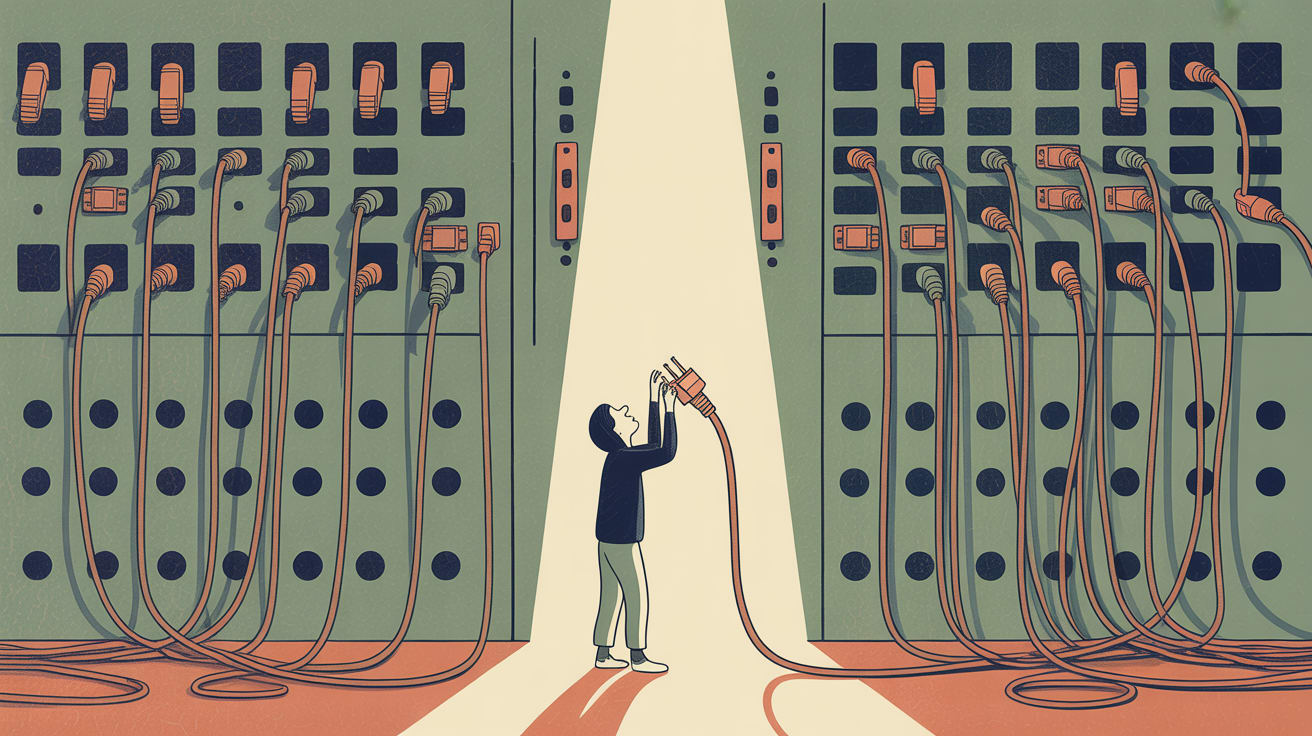
Consider the activation use case that currently requires a human in the loop: a high-value customer segment qualifies for a personalised outreach, but the CRM, the loyalty platform, and the campaign tool don’t share a native integration. Someone manually exports, reformats, and imports. With a browser-capable agent wired to your CDP’s audience output, that handoff becomes automatable — the agent navigates the destination platform, maps fields, and executes the upload.
This isn’t science fiction. The Playwright MCP implementation described is production-ready for constrained, well-defined tasks. The failure mode to watch: agents sent into ambiguous interfaces without guardrails will hallucinate actions. Define the task boundary tightly, log every action, and build human review into any workflow touching customer PII — especially relevant given Southeast Asia’s patchwork of data localisation requirements across Thailand, Indonesia, Vietnam, and the Philippines.
The Stack Is Getting Smarter, but the Strategy Gap Stays the Same
Here’s what these three signals add up to: the tooling layer is becoming dramatically more capable, faster than most marketing organisations are adapting their operating models to use it.
Better prompting means faster pipeline development. dbt consolidation means cleaner transformation logic. Browser agents mean fewer manual activation handoffs. But none of this matters if your CDP is still built around a single golden profile that nobody has agreed to maintain — the most common failure mode I see across regional brands.
The unified customer profile isn’t a technical achievement. It’s a political one. Getting behavioural data from your app team, transactional data from finance, and declared data from your loyalty programme into a single activation-ready view requires someone to own the data contracts, not just the data models. The tools are ready. The governance question is the one still sitting unanswered in most organisations.
Key Takeaways
- Build a version-controlled prompt library for recurring CDP tasks — treat it with the same rigour as your SQL style guides, not as a nice-to-have.
- Use the dbt Snowflake Native App retirement deadline as a forcing function to audit and consolidate your transformation layer before November 2026.
- Browser-capable LLM agents are production-ready for tightly scoped activation handoffs — but define task boundaries explicitly and log every action touching customer PII.
The platforms are converging. The agents are getting smarter. The question worth sitting with: if the tooling excuse disappears, what’s the honest reason your unified profile still isn’t driving revenue?
At grzzly, we work with marketing and data teams across Southeast Asia to close the gap between CDP investment and actual activation — from data contracts and identity resolution strategy to the agent workflows that turn unified profiles into triggered, personalised moments at scale. If your stack is getting smarter but your activation results aren’t, that’s a conversation worth having. Let’s talk
Sources

Written by
Velvet GrizzlyArchitecting the unified customer profile — stitching together behavioural, transactional, and declared data into platforms that actually earn their licence fee.