
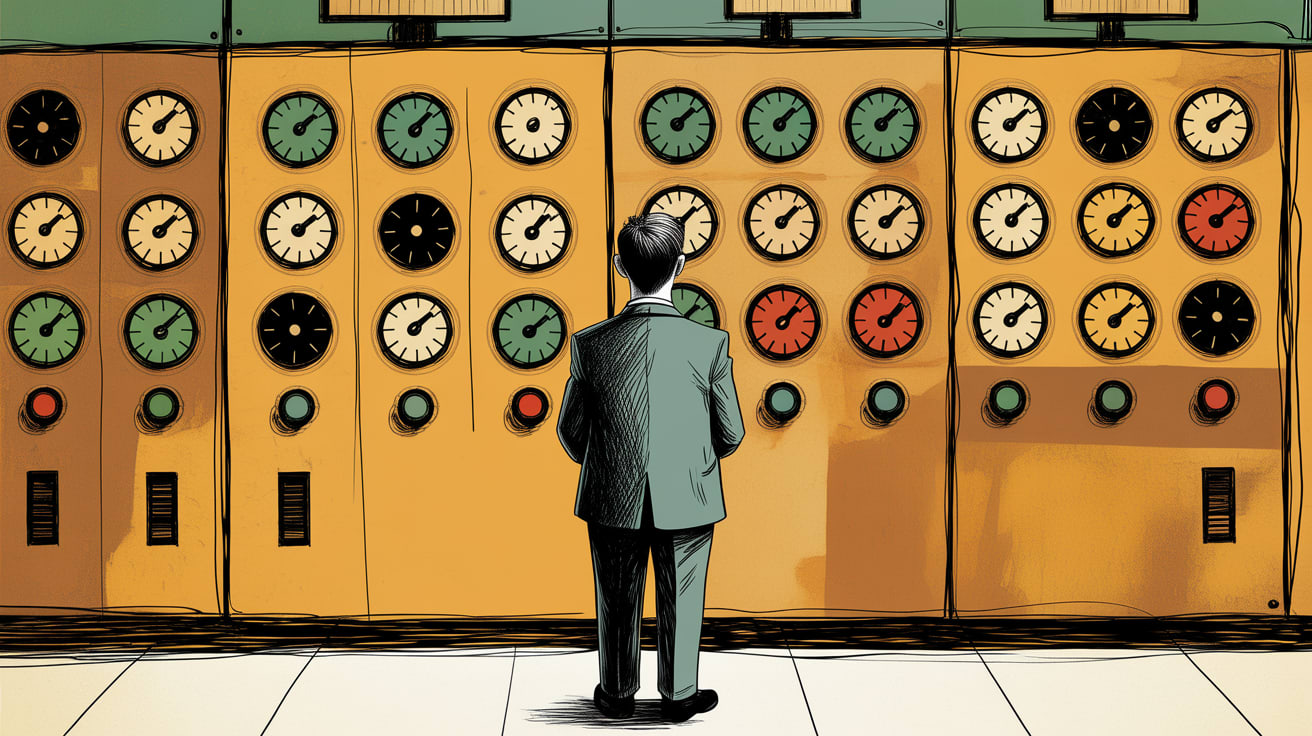
88% of marketers now use AI daily. But data volume isn't your edge — knowing which signals to act on is. Here's what campaign optimization looks like in 2026.
Global ad spend has crossed $1 trillion. Eighty-eight percent of marketers are using AI every day. Marketing automation, according to HubSpot’s research, is generating 80% more leads and driving conversion rates 77% higher than manual workflows. Those numbers are striking — but they also contain a quiet warning.
When everyone has the same tools running the same optimizations, the tools stop being the advantage. What separates campaigns that compound from campaigns that plateau is interpretive judgment: knowing which signals are noise, which are early indicators, and which are the one lever worth pulling right now.
Why More Data Is Making Some Teams Slower
The irony of the AI-assisted marketing era is that dashboards have gotten richer while strategic clarity has gotten harder to maintain. Teams that built their optimization practice around volume — more A/B tests, more segments, more automated rules — are finding themselves managing complexity rather than generating insight.
HubSpot’s analysis points to a useful frame: the highest-performing teams aren’t running more experiments, they’re running better-sequenced ones. They establish a clear hypothesis hierarchy — starting with audience and message fit before touching bid strategy or creative format. In Southeast Asia, where a single campaign often needs to perform across Thai, Bahasa, Vietnamese, and English-language audiences simultaneously, this sequencing discipline isn’t optional. It’s survival.
The practical implication: audit your current optimization stack not for what it tracks, but for what decisions it actually informs. If a metric isn’t connected to a specific action your team can take within 48 hours, it’s ambient noise.
Sentiment Analysis Has Grown Up — Use It Accordingly
For years, sentiment analysis was the feature brands mentioned in strategy decks and rarely acted on. The tooling was blunt: positive, negative, neutral. Not particularly useful when you’re trying to understand why a campaign is technically performing but somehow feels flat in market.
Sprout Social’s 2026 review of sentiment analysis tools highlights a meaningful shift. The leading platforms — Brandwatch, Sprout itself, Talkwalker among others — now offer emotion-layered analysis that can distinguish between, say, excitement and relief, or frustration and disappointment. That granularity matters enormously for campaign optimization because the remedies are completely different.
A Southeast Asian consumer expressing disappointment with a product launch is giving you a different brief than one expressing confusion. Shopee sellers in Indonesia who monitor buyer sentiment at the SKU level are already using this distinction to adjust product copy and promotional framing mid-campaign — not just post-mortem. That’s the operational model worth emulating: sentiment as a real-time input, not a retrospective report.
One implementation note worth taking seriously: sentiment tools trained primarily on English-language data still underperform on Bahasa, Thai, and Vietnamese. Verify your tool’s language model coverage before assuming regional accuracy.
The YouTube Signal That Campaign Strategists Are Underweighting
YouTube doesn’t fit neatly into most campaign optimization conversations, which is exactly why it’s worth addressing here. Social Media Examiner’s analysis of what separates stalling YouTube channels from compounding ones reveals something that applies well beyond the platform: consistency of format builds audience trust faster than consistency of topic.
For brand campaigns running video across YouTube, TikTok, and Meta, this reframes the testing question. Most teams optimize for message — which claim resonates, which offer converts. Fewer teams optimize for format coherence: does the audience know what they’re getting before the first three seconds are up? In high-scroll environments like those in the Philippines or Thailand — where mobile video consumption is among the highest globally — the recognition signal in the first frame does more conversion work than the call-to-action at the end.
Tactically, this means building creative templates with locked structural elements (opening frame type, pacing, visual identity cues) while varying the message layer. You get statistically cleaner tests and a format equity that compounds over time.
Building an Optimization Cadence That Survives Contact With Reality
The gap between optimization theory and optimization practice usually comes down to cadence. Teams agree on a framework in the planning phase, then fragment under execution pressure — someone pulls a campaign early because a senior stakeholder saw a bad day of numbers, or a creative variant gets killed before it’s reached statistical significance.
The fix is structural, not motivational. HubSpot’s research recommends pre-committing to decision triggers before campaigns launch: specific thresholds that determine when you act, not who gets nervous first. Define your confidence interval requirements. Specify which metrics gate which decisions — CTR doesn’t gate budget reallocation; cost-per-acquisition does.
For regional teams managing multiple market campaigns simultaneously, a shared optimization playbook with market-specific parameters is more valuable than any individual tool. Grab’s marketing teams, for instance, operate with localized performance benchmarks by country — what constitutes a strong CPM in Singapore looks meaningfully different from Vietnam, and treating them as interchangeable leads to misallocated spend.
The discipline of pre-commitment also protects against the organizational reflex of chasing the most recent data point. In volatile markets — and most Southeast Asian markets remain structurally volatile — that reflex is expensive.
Key Takeaways
- Pre-commit your optimization triggers before launch — define the specific metrics and thresholds that drive decisions, so team judgment isn’t overridden by stakeholder anxiety mid-flight.
- Upgrade your sentiment analysis practice from retrospective reporting to real-time campaign input, but verify your tool’s language model covers your actual audience languages.
- Optimize for format coherence in video campaigns, not just message variation — structural consistency builds audience recognition that compounds across every flight.
The $1 trillion ad spend figure will keep climbing. AI will keep getting faster. But the brands that will look back at 2026 as the year they pulled ahead won’t be the ones who ran the most tests — they’ll be the ones who got sharper about what a test is actually trying to answer. The real question isn’t whether your optimization stack is sophisticated enough. It’s whether your team has the interpretive clarity to use it.
At grzzly, we work with marketing teams across Southeast Asia who have the data and the tools — but need a sharper framework for turning signals into decisions. Whether it’s building a regional optimization playbook or pressure-testing a campaign structure before launch, this is exactly the kind of challenge we enjoy. Let’s talk
Sources

Written by
Vintage GrizzlySynthesising channel intelligence, audience psychology, and market context into coherent growth strategies. Old enough to remember the last paradigm shift; sharp enough to see the next one forming.