From Bluesky's community-first model to AI voice training and Cannes conversion data — three digital strategy signals SEA marketers can't ignore.
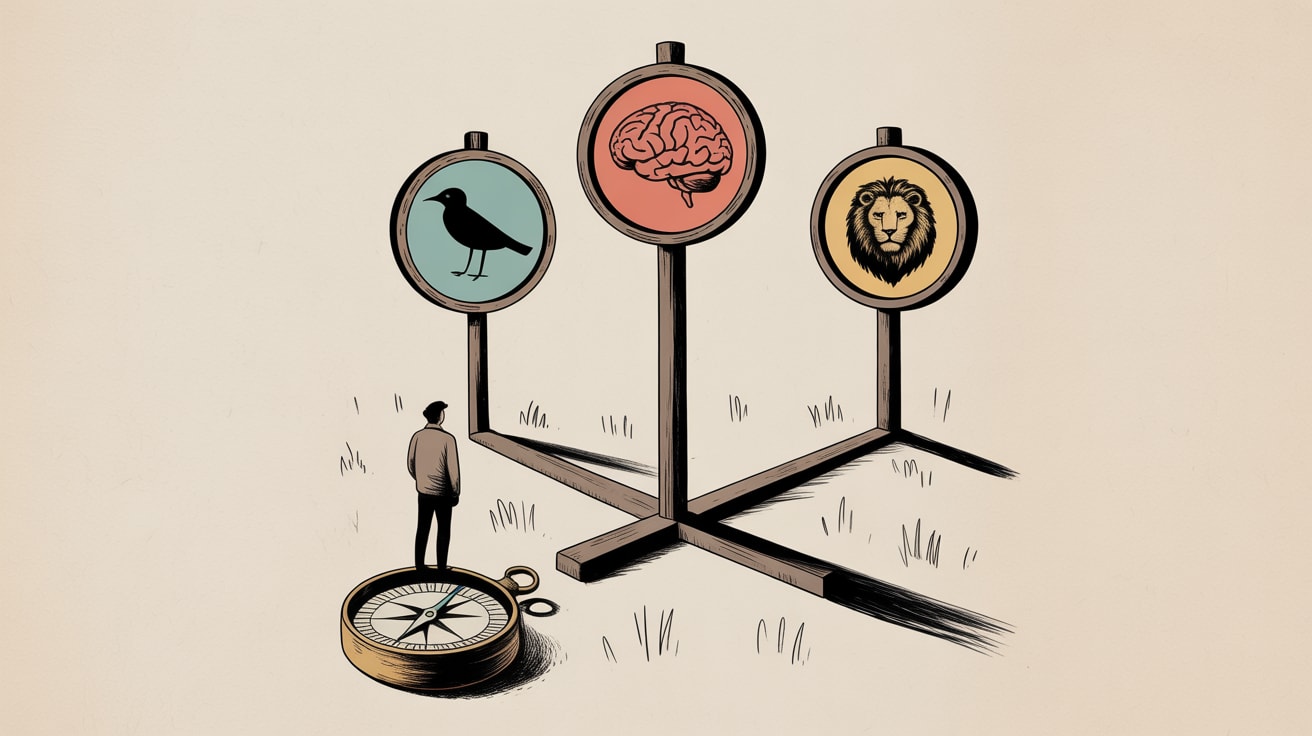
Three signals landed in the same week that, taken separately, feel like noise. Together, they sketch a coherent direction for digital strategy heading into the back half of 2026. A Cannes conversion-rate dataset that reframes how we judge creative ROI. A Bluesky playbook that argues community architecture beats reach. And a framework for training AI to replicate strategic thinking — not just tone. Here’s what each one actually means for growth teams in Southeast Asia.
Cannes Lions Data Reveals That Creative Effectiveness Is Measurable — If You Ask the Right Question
Campaign Live’s analysis of holdco conversion rates at Cannes 2026 offers something the awards circuit rarely provides: a denominator. WPP topped the table, but the more instructive figure sits with indie shop Jones Knowles Ritchie London, which posted a 75% shortlist-to-win conversion rate. That’s not a volume game — it’s a precision game.
For marketers who use awards as a proxy for creative quality (and boards who fund creative on that basis), this reframes the question. It’s not “how many Lions did the agency enter?” but “what proportion of their submitted work actually converted?” A high conversion rate signals that an agency’s internal creative bar is already set above the industry average before anything reaches a jury.
The practical implication for Southeast Asian brands briefing agencies: ask for conversion rate data, not trophy counts. An agency entering 40 pieces and winning 4 is performing very differently from one entering 6 and winning 4. The ratio tells you more about strategic discipline than the absolute number ever will.
Bluesky’s Community Architecture Is a Structural Advantage — Not Just a Vibe
Sprout Social’s comprehensive Bluesky guide makes a case that deserves more attention than the platform’s current user numbers might suggest. The core argument: Bluesky’s user-controlled Feeds and transparent algorithmic infrastructure create a fundamentally different trust environment than X or Threads.
For brands, this is less about where the eyeballs are today and more about the structural incentives baked into the platform. On Bluesky, users choose which Feeds curate their experience — meaning a brand that earns a spot in a niche Feed (say, a B2B tech vertical or a regional marketing community) gets genuinely opted-in distribution. The algorithmic opacity that makes X and Meta so unpredictable simply doesn’t exist in the same way.
In Southeast Asia, this matters particularly for brands targeting professional or creator communities — markets where LINE and Telegram already demonstrate that niche, high-trust channels outperform broadcast platforms on engagement quality. Bluesky isn’t a X replacement; it’s closer to a community infrastructure play. The brands that build presence now, while Feeds are still forming, will have category-defining positions within those curated environments before the platform scales.
Implementation note: Start by identifying which existing Bluesky Feeds your target audience already subscribes to, then reverse-engineer the content type that earns placement. Don’t post at the platform — post into the community.
Training AI on Your Thinking Is a Competitive Moat, Not a Productivity Hack
Michael Stelzner’s Social Media Examiner framework for training AI on personal voice deserves a strategic upgrade in how it’s being discussed. Most coverage positions this as a time-saving tool. The more important framing: institutionalised strategic thinking is a defensible asset.
The method is concrete. Stelzner’s approach uses meeting transcripts, written decisions, and recorded reasoning sessions to build a personalized AI profile that captures not just tone but analytical patterns — the “why” behind decisions, not just the “what.” Fed consistently, an AI trained this way can draft briefs, stress-test strategies, and generate options that reflect a specific senior perspective rather than generic best-practice output.
For Southeast Asian marketing teams — often managing multilingual content pipelines, cross-market campaigns, and localisation complexity simultaneously — this has immediate operational relevance. The constraint isn’t usually creative capacity; it’s the bottleneck of senior strategic input. An AI profile trained on a regional CMO’s decision-making patterns can extend that thinking to junior team outputs without the review cycle becoming a chokepoint.
The failure mode to avoid: training AI on polished final outputs rather than messy in-process reasoning. The transcripts that reveal how a decision was made — including what was rejected and why — are more valuable than the finished memo. Sanitised inputs produce sanitised outputs.
Key Takeaways
- Evaluate agency creative by conversion rate, not awards volume — the ratio of shortlisted-to-won work reveals strategic discipline more honestly than any trophy count.
- Treat Bluesky as community infrastructure, not a broadcast channel — identify existing Feeds your audience follows and engineer content worthy of placement within them before the platform scales.
- Train AI on decision-making transcripts, not finished work — capturing how senior strategists reason, not just what they conclude, is what makes AI output genuinely differentiated.
The thread connecting all three signals is the same: precision over volume. Fewer, better creative submissions. Earned, specific community reach. AI that replicates depth, not just output rate. The brands and agencies that internalise this will have a compounding advantage as platforms get noisier and AI output becomes ambient. The interesting question is which of these three — creative efficiency, community trust, or institutionalised AI thinking — will prove hardest to replicate once a competitor gets there first.
At grzzly, we work with growth teams across Southeast Asia on exactly this kind of signal synthesis — translating what’s happening globally into strategies that account for the real complexity of operating across SEA’s markets, platforms, and audiences. If you’re trying to figure out which of these directions deserves your team’s energy right now, we’d enjoy that conversation. Let’s talk
Sources

Written by
Vintage GrizzlySynthesising channel intelligence, audience psychology, and market context into coherent growth strategies. Old enough to remember the last paradigm shift; sharp enough to see the next one forming.