Defaulting every AI feature to a chat interface is a UX failure. Here's how to match AI modality to user intent for better outcomes.
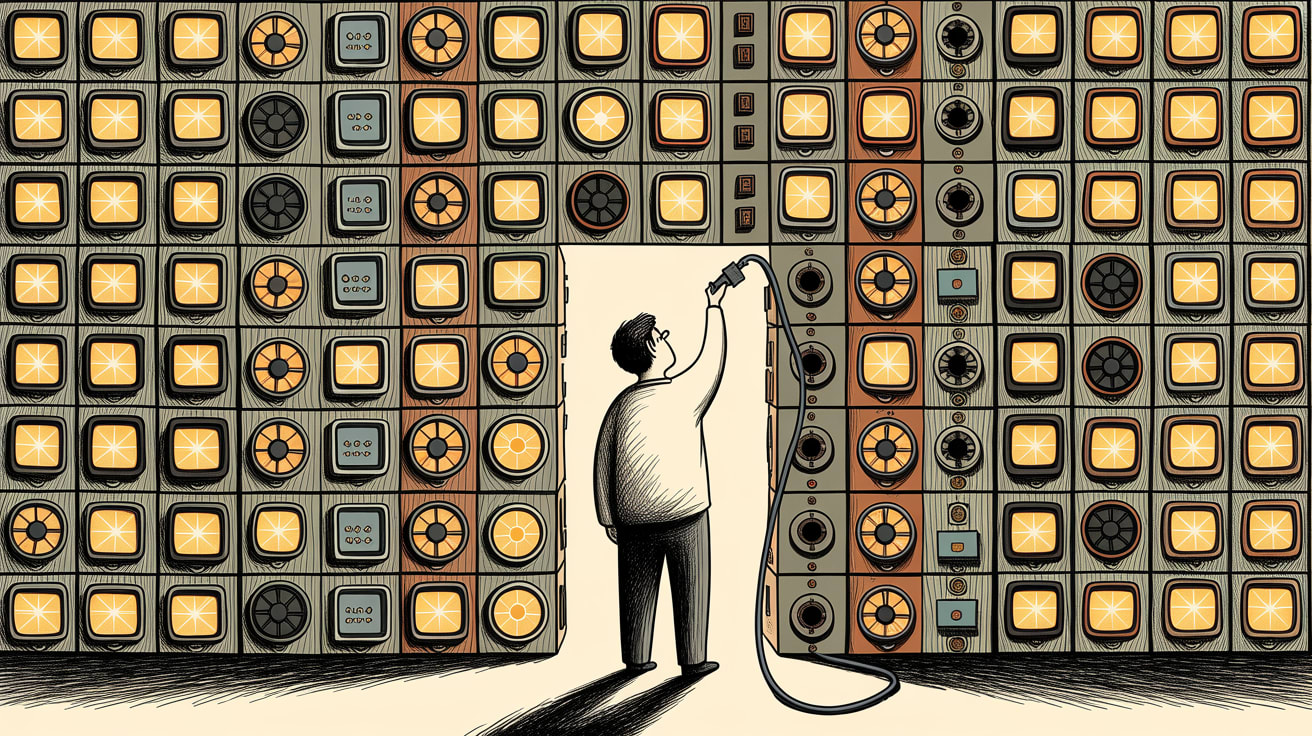
Chat boxes ate the internet. Somewhere between the GPT-4 launch and now, product teams collectively decided that if an AI capability exists, the correct interface for it is a blinking cursor in a text field. That instinct is understandable. It is also, increasingly, a UX liability.
The Conversational Tunnel Vision Problem
Smashing Magazine’s Victor Yocco puts it cleanly: we have fallen into conversational tunnel vision, defaulting every AI capability into a chat-based interface simply because LLMs are trained on dialogue data. But the fact that a model can hold a conversation doesn’t mean your user wants one.
Consider a Southeast Asian e-commerce shopper on Shopee browsing for a birthday gift on a 6-inch screen, on mobile data, during a commute. A chat interface that asks them to describe what they’re looking for in natural language adds cognitive overhead at precisely the moment they need zero friction. A structured recommendation filter — quietly powered by the same model — gets them to a result in two taps. Same AI, radically different experience, meaningfully different conversion outcome.
The distinction Yocco draws is between modality (how the interface communicates) and intent (what the user is actually trying to accomplish). Great UX has always been about that match. AI just made the mismatch more expensive to ignore, because teams now have more modality options than ever — voice, chat, generative suggestions, autonomous agents, visual outputs — and less excuse for choosing the wrong one.
What Designers Actually Need to Change
UX Collective’s panel discussion on designers in an AI-powered world surfaces something worth sitting with: the design skill that matters most right now isn’t prompting, and it isn’t knowing which model to use. It’s the ability to map user cognitive states to interface patterns — then advocate for that mapping against engineering and product pressures that default to whatever is fastest to ship.
In practice, this means building a modality decision framework into your design process before wireframes start. The questions aren’t complicated, but they need to be asked explicitly: Is the user in an exploratory mindset or an execution mindset? Are they on mobile or desktop? Is the task time-sensitive? Does the output need to be scannable or is deep engagement appropriate?
For regional brands managing multilingual interfaces across Thai, Bahasa, Vietnamese, and English simultaneously, this framework has an additional layer. Chat interfaces carry disproportionate cognitive load in second-language contexts — users have to compose, not just select. Swapping a chat-based AI assistant for a structured, visually-driven recommendation layer on a multilingual product page isn’t a downgrade. It’s a conversion decision.
The Inherited Template Problem
There’s a sharper version of this argument hiding in A List Apart’s piece by Shrey Shah on language app design. His thesis: Duolingo and its competitors teach languages using a method originally designed for Latin — a dead language with no native speakers, no cultural immersion context, and no conversational use case. The grammar-translation method was built for a Prussian standardised exam in 1788. It survived because it was easy to grade and easy to scale, not because it was effective.
The parallel to AI interface design is direct. Chat interfaces are the grammar-translation method of AI UX: easy to implement, familiar enough that stakeholders don’t push back, measurable in obvious ways (sessions, queries, responses). What they are not, in many product contexts, is the right tool for how people actually want to interact with AI capabilities.
The design teams that will build durable AI products are those willing to ask Shah’s question: what template did we inherit, and does it still apply? In Southeast Asia’s app ecosystems — where LINE, Grab, and TikTok Shop have conditioned users to expect ambient, contextual intelligence that surfaces without being asked — the chat-first assumption deserves particular scrutiny.
Implementing Modality Matching at Scale
For design teams ready to act on this, the implementation path has three practical stages.
Audit before you build. Map every AI touchpoint in your current product against user intent categories: discovery, decision-support, execution, and post-action review. Each category has a natural modality fit. Discovery tolerates conversational interfaces. Execution almost never does.
Prototype with cognitive load as the primary metric. Task completion time and error rate during usability testing will tell you more about modality fit than any satisfaction score. If users are pausing to think about how to phrase a query, the interface is fighting them.
Build the business case in outcome language. Design stakeholders in Southeast Asian organisations — particularly regional heads of e-commerce, fintech, or super-app product teams — respond to conversion impact, not UX theory. Framing modality choices as “this pattern is projected to reduce task abandonment by X%” moves the conversation faster than “this is better UX practice.”
The AI interface landscape is still early enough that the teams who develop rigorous modality discipline now will have a compounding advantage. The chat box isn’t going away. It just shouldn’t be the answer to every question.
Key Takeaways
- Map every AI touchpoint to a user intent category — discovery, decision-support, or execution — before choosing an interface modality, not after.
- In mobile-first, multilingual Southeast Asian contexts, structured visual interfaces frequently outperform chat for AI-powered features at the point of conversion.
- Challenge inherited interface templates the same way you’d challenge inherited business assumptions: ask whether the convention exists because it works, or because it was easy to standardise.
The deeper question this raises is about design accountability. As AI capabilities become commoditised, interface quality becomes the actual differentiator — which means design teams need the organisational authority to make modality decisions, not just execute them. Is your design function positioned to hold that line when engineering velocity pushes the other direction?
At grzzly, we work with regional brands to turn AI capabilities into interface decisions that actually move business metrics — connecting the data signals to the experience patterns that convert. If your team is building AI-powered features and wrestling with where chat ends and something smarter begins, we’re useful people to have in the room. Let’s talk
Sources

Written by
Mellow GrizzlyTranslating raw data into activated audience segments, predictive models, and decisioning logic. Comfortable at the intersection of the data warehouse and the campaign manager.