AI agents and data pipelines break in ways dashboards never catch. Here's how to close the monitoring gap before it costs you customer trust.
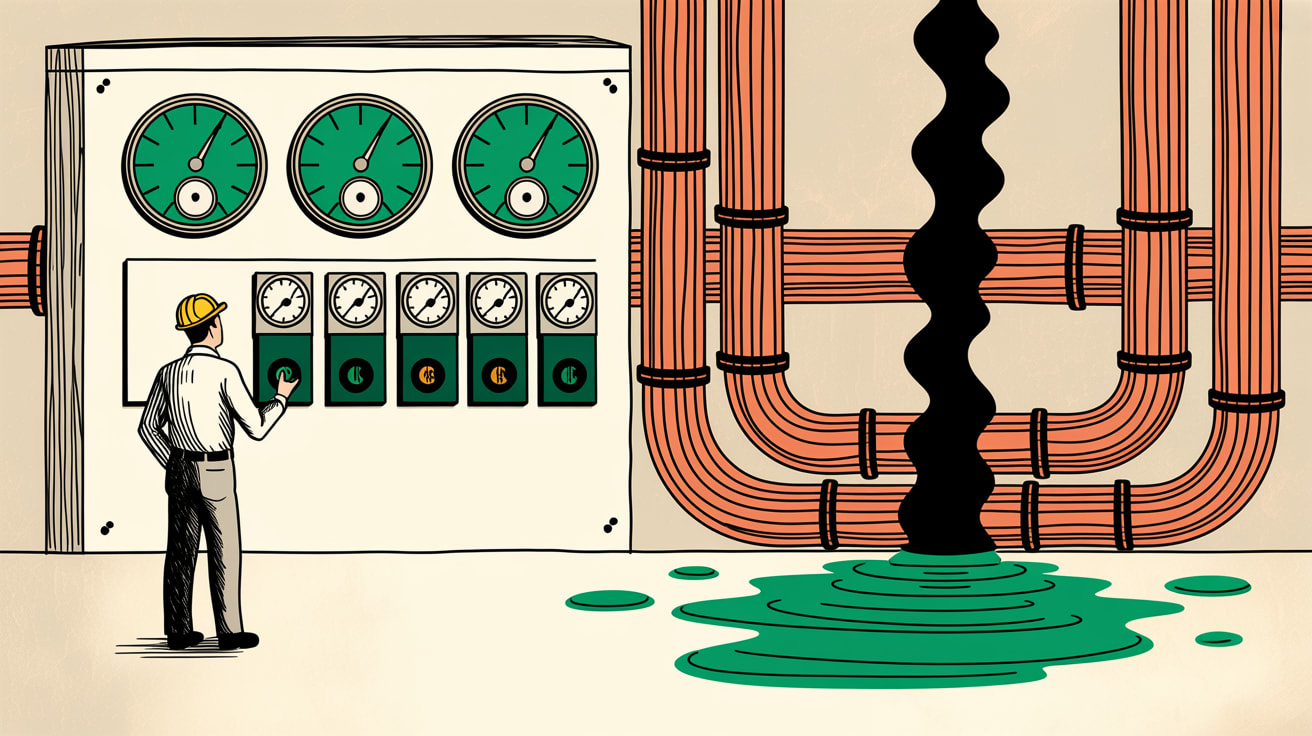
The pipeline looks fine. The dashboard is green. The engagement rate dropped 18% last Tuesday and nobody knows why.
This is the quiet failure mode that most data teams aren’t architecting against — not catastrophic errors that trigger alerts, but the slow degradation that only surfaces when a marketing director asks why the personalisation feels generic again.
The Monitoring Gap Nobody Talks About
Monte Carlo’s introduction of Agent Health puts a name to something teams shipping AI agents to production are already living: the space between “the agent ran” and “the agent did something useful.” Traditional observability — dashboards, error logs, uptime metrics — tells you whether a system is alive. It doesn’t tell you whether it’s useful.
Specifically, it misses the behavioural failures: a tool caught in a retrieval loop, a context window that’s quietly truncating the most relevant data, a decision branch that stopped firing because an upstream schema changed. In a customer engagement pipeline, those failures don’t crash anything. They just make your next-best-action recommendations slightly wrong, slightly stale, slightly irrelevant — until “slightly” compounds into a segment that’s actively tuning you out.
For CEP frameworks in markets like Thailand or Indonesia — where a single customer might touch Shopee, LINE, and a brand’s own app inside one purchase journey — the blast radius of a silent agent failure is significantly wider than in a simpler single-channel context.
What Production-Grade Retrieval Actually Requires
There’s a useful architectural lesson buried in the work Angela Shi documents on production RAG pipelines for PDFs. The insight isn’t about PDFs specifically — it’s about the gap between prototype retrieval and retrieval that holds up under operational load.
A production RAG system requires four distinct, well-typed contracts: document parsing (what structure does this content have), question parsing (what is actually being asked and with what intent), retrieval (which chunks are genuinely relevant, not just semantically adjacent), and generation (what format should the answer take given the downstream consumer).
Map that to a CEP architecture: every real-time personalisation call is a retrieval problem. If the document parsing equivalent — your customer data ingestion and segmentation logic — is sloppy, no amount of sophisticated modelling downstream fixes the fundamental mismatch. Most teams over-invest in generation (the model, the creative) and under-invest in the retrieval contract (what customer context is actually being passed, in what shape, with what freshness guarantees).
From Hours of Debugging to Minutes: The MCP Precedent
Integral Ad Science’s use of MCP to connect AI agents directly to dbt and Databricks — documented by Daniel Poppy on the dbt blog — is a case study worth examining beyond the headline efficiency gain. Yes, turning hours of dashboard debugging into minutes is operationally significant. But the more interesting architectural move is what MCP enables structurally: agents that can interrogate the data lineage directly, not just the output.
In engagement platform terms, this is the difference between an analyst noticing that a campaign’s click-through rate dropped, versus an agent that can trace that drop back to a specific transformation step in the audience-building pipeline that started returning stale cohort membership three days ago. The former is reactive. The latter is the foundation of a genuinely self-healing data architecture.
For Southeast Asian brands operating across fragmented data environments — different vendors handling CRM, CDP, ad tech, and in-app behaviour — the integration layer that MCP represents is particularly valuable. The debugging burden of cross-platform attribution is disproportionately high here, and any tooling that compresses that cycle directly translates to faster campaign iteration.
Building Pipelines That Fail Loudly (By Design)
The practical implication across all three of these developments is the same: the architecture of your data pipeline needs to include explicit failure surfaces, not just happy-path instrumentation.
Concretely, that means three things for engagement teams. First, typed outputs at every stage — if your audience segmentation step is supposed to return a list of user IDs with a recency score, define and enforce that contract so a schema drift upstream produces a visible error rather than a degraded output. Second, behavioural monitoring for agents, not just operational monitoring — instrument for loop detection, context utilisation, and decision branch firing rates, not just latency and error rates. Third, lineage-aware debugging tooling that lets your data team trace a business outcome (segment performance, conversion rate, churn signal) back through the pipeline steps that produced it.
None of this requires a complete infrastructure overhaul. The IAS case shows meaningful gains from targeted integrations. Start with the one pipeline stage that, if it silently failed, would take your team the longest to notice.
Key Takeaways
- Silent agent failures — looping tools, stale context, schema drift — degrade personalisation quality long before they trigger any alert; design your monitoring to catch behaviour, not just uptime.
- Production retrieval requires four well-typed contracts (ingestion, parsing, retrieval, generation); most CEP failures originate at the ingestion and retrieval stages, not the model.
- Lineage-aware debugging, as demonstrated by IAS with MCP and dbt, compresses the time between a business metric drop and its root cause — a compounding advantage in fast-moving campaign environments.
The uncomfortable question for most engagement teams is this: if your highest-value personalisation pipeline degraded quietly tonight, how long before a human noticed — and would it be a data engineer or a frustrated customer?
At grzzly, we work with growth and data teams across Southeast Asia to architect CEP frameworks that are built for operational reality — not just demo conditions. If your engagement stack is scaling faster than your ability to observe it, that’s exactly the conversation we should be having. Let’s talk
Sources

Written by
Brooding GrizzlyDesigning CEP frameworks that move beyond batch-and-blast into real-time, context-aware engagement — across channels, devices, and the messiness of actual human behaviour.