AI agents connected to dbt and Databricks are turning hours of dashboard debugging into minutes. Here's what that means for your CDP strategy.
The average marketing data team spends somewhere between 30–40% of its time not building — but debugging. Broken dashboards, stale metrics, misaligned model definitions that only surface when a CMO asks a question in a Monday morning review. The cost is real, even if it rarely shows up in a budget line.
That calculus is starting to shift. Not because the underlying data complexity is going away — it isn’t — but because AI agents are being wired directly into the transformation and orchestration layer where the pain actually lives.
When Agents Touch the Data Layer Directly
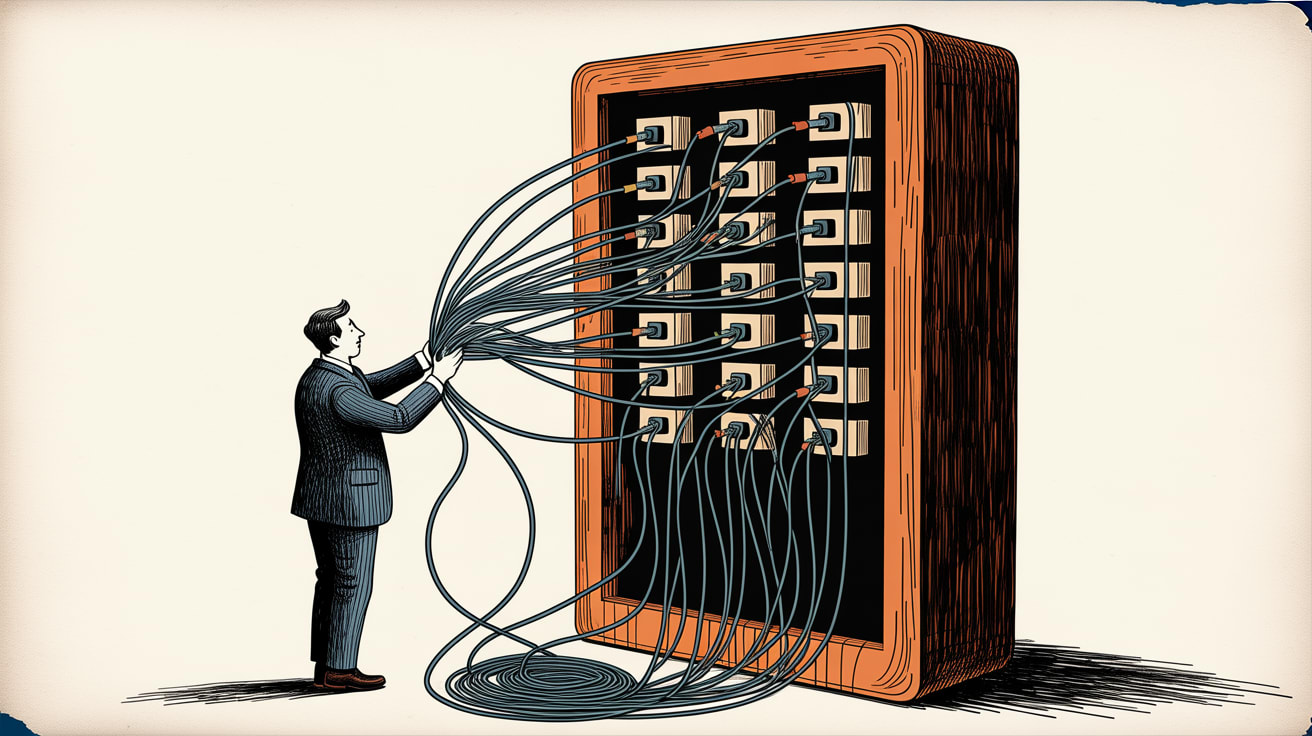
Integral Ad Science’s engineering team recently demonstrated what this looks like in practice. As dbt’s blog details, IAS connected AI agents to both dbt and Databricks using the Model Context Protocol (MCP) — essentially giving agents read access to the transformation layer itself, not just the outputs sitting in a BI tool. The result: dashboard errors that previously required a data engineer to triage over several hours were resolved in minutes.
The strategic implication here goes beyond speed. When an agent can inspect a dbt model definition, trace a lineage graph, and identify where a metric is breaking — without a human translating between the BI layer and the warehouse — you’ve fundamentally changed the feedback loop between marketing teams and data teams. Analysts stop being ticket submitters. They become investigators with a much more capable partner.
For Southeast Asian brands running consolidated marketing stacks across Shopee, Lazada, and owned e-commerce — where attribution models are already strained across platforms — this kind of agentic debugging capacity is particularly valuable. Pipeline failures in high-velocity retail environments don’t wait for the next sprint.
The Security Parallel Worth Stealing From
It would be easy to treat this as a purely technical story. But there’s a management pattern here that’s worth pulling out and applying more broadly.
Steven Carlson’s account of how Monte Carlo’s team built a fleet of 19 security agents is instructive. The origin wasn’t a top-down mandate — it was one engineer who got tired of running the same architecture review by hand and wrote a workflow to replace themselves. By February, the same instinct hit vulnerability triage. The fleet grew from a single act of automation pragmatism.
This is how durable data infrastructure actually gets built in mid-size marketing organisations. Not from a big-bang CDP implementation with a 12-month roadmap, but from practitioners who identify repeatable, painful workflows and systematically replace the manual steps. The technology is a detail. The habit of identifying what should never require a human again — that’s the strategic muscle.
CDPs that earn their licence fee in 2026 aren’t just unified profile stores. They’re environments where this kind of incremental automation compounds over time.
What This Means for Unified Customer Profile Architecture
The connection to customer data strategy is direct. A unified customer profile is only as trustworthy as the pipelines feeding it. Behavioural data from mobile apps, transactional data from POS or e-commerce platforms, declared data from CRM and loyalty programmes — each of these has its own ingestion logic, its own failure modes, and its own definition drift over time.
Today, when a segment behaves unexpectedly in a campaign — open rates collapse, conversion attribution goes dark — the default response is a Slack message, a Jira ticket, and a wait. What IAS demonstrated is that the triage step, at minimum, can be agentic. An agent that understands your dbt model definitions can tell you within minutes whether the anomaly is a data problem or a campaign problem. That distinction matters enormously when you’re making real-time budget allocation decisions across programmatic channels.
For teams building on Databricks or Snowflake with dbt in the transformation layer, MCP-based agent integration is now close enough to production-ready that it belongs in your 2026 data stack roadmap — not your 2027 experimentation backlog.
The mobile-first context of Southeast Asian markets adds another layer of urgency. When the majority of your customer touchpoints are happening on mobile — often on lower-bandwidth connections, across a patchwork of apps and super-app ecosystems — the window between data ingestion and actionable insight is already compressed. Pipeline reliability isn’t a nice-to-have. It’s table stakes for personalisation that doesn’t embarrass your brand.
The Skill Gap You Should Be Hiring Around Now
None of this works without people who understand both the data transformation layer and the business questions being asked of it. The IAS and Monte Carlo examples share a common thread: engineers who could think in workflows, not just in queries.
The role that’s becoming structurally important — and chronically undersupplied in Southeast Asian markets — is the analytics engineer who can design agentic workflows around data quality and pipeline reliability. This is distinct from a data scientist and distinct from a traditional BI developer. It sits in the gap between infrastructure and insight.
If your CDP implementation is currently dependent on a small number of specialists who hold the tribal knowledge of your transformation logic in their heads, that’s a concentration risk. Agentic tooling helps, but only if the underlying models are documented, modular, and built with agent-readable lineage in mind. That’s an architectural decision you make before the agents arrive, not after.
Key Takeaways
- Connect AI agents to your dbt transformation layer — not just your BI outputs — to cut pipeline debugging time and give analysts genuine investigative capacity.
- Build agentic automation around your most repetitive data quality workflows first; compounding small wins beats waiting for a comprehensive platform overhaul.
- Audit your CDP’s pipeline documentation now — agent-readable model lineage isn’t optional if you want agentic tooling to actually work at speed.
The question worth sitting with: if your data pipelines were reliable enough that your analysts spent zero time debugging and all their time interpreting — what decisions would your brand be making differently? That’s not a rhetorical flourish. It’s a gap analysis disguised as a question.
At grzzly, we work with marketing and data teams across Southeast Asia on exactly this — designing CDP architectures that hold up under the weight of real regional complexity: multi-platform data sources, mobile-first behavioural signals, and the kind of pipeline fragility that only shows up when a campaign is already live. If your unified customer profile is more aspiration than infrastructure right now, we’d enjoy the conversation. Let’s talk
Sources

Written by
Velvet GrizzlyArchitecting the unified customer profile — stitching together behavioural, transactional, and declared data into platforms that actually earn their licence fee.