Three signals reshaping digital strategy in SEA: answer engine optimisation, influence at network scale, and productising expertise with AI. Here's what they mean.
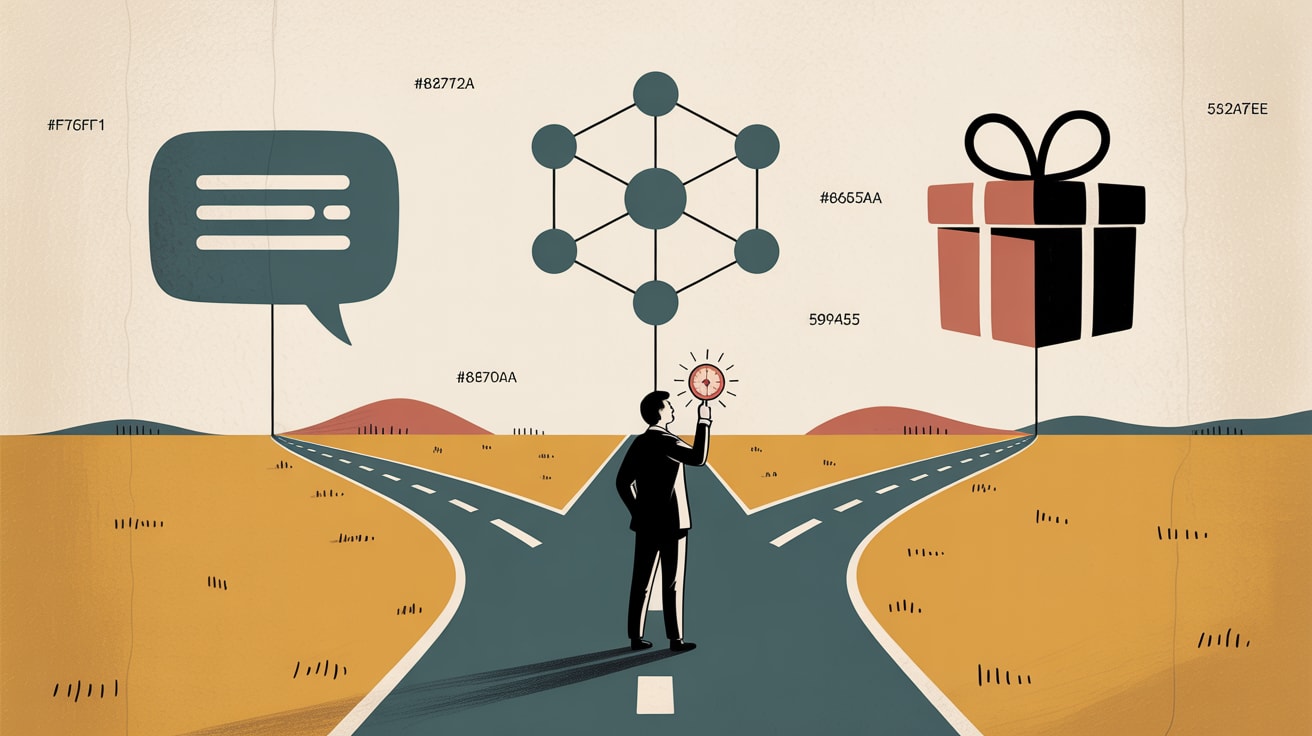
Three stories broke this week that, on the surface, look unrelated. WPP restructured its influence practice across EMEA. HubSpot published a deep comparison of AEO tools. Social Media Examiner ran a piece on turning expertise into AI-powered products. Read them together, and they’re sketching the same underlying shift: the architecture of digital strategy is being quietly rebuilt around AI intermediaries — and most marketing teams haven’t updated their blueprints.
Answer Engines Are Already Filtering Your Brand Out
HubSpot’s comparison of AEO versus traditional SEO tools makes a point that deserves to land harder than it will: buyers aren’t just searching anymore — they’re asking. ChatGPT, Gemini, and Perplexity are now fielding product and service queries that used to land on branded search results pages. If your brand isn’t surfaced in those AI-generated answers, you’re not losing rank — you’re losing consideration entirely, before a human even enters the picture.
The strategic implication for Southeast Asian brands is sharper than it might appear. Markets like Thailand, the Philippines, and Vietnam are seeing rapid AI assistant adoption layered on top of already mobile-first search behaviour. A consumer in Manila asking Gemini for the best logistics partner for e-commerce fulfillment will get a synthesised answer — and brands that haven’t structured their content to be cited by AI models won’t appear in it. The fix isn’t cosmetic. It requires rearchitecting content around structured data, authoritative source-building, and the kind of specific, verifiable claims that AI models are trained to surface.
WPP’s Influence Move Is a Structural Signal, Not a Hire
When WPP elevated Imogen Coles from Ogilvy’s EMEA influence lead to a network-wide role spanning its creative agencies, the announcement read like a personnel update. It’s actually a strategic thesis made organisational. The world’s largest agency group is betting that influence — not just influencer content, but the broader mechanics of how trust and attention move between people — needs to be managed at the network level, not siloed inside individual agencies.
For brand teams in Southeast Asia, this is worth watching closely. The region’s influence ecosystem is structurally different from EMEA: LINE-driven micro-communities in Thailand, TikTok Shop’s direct commerce integration in Indonesia, and the blurred line between KOL and retail partner in Vietnam all demand a more integrated approach than a single-channel campaign brief allows. The move toward centralised influence strategy — treating it as a discipline with its own architecture rather than a content format — is a pattern SEA marketing leads should be replicating internally. Influence is no longer a line item in a media plan; it’s an operating model.
Productising Expertise: What Agencies and Brand Teams Can Learn
Social Media Examiner’s piece on turning hard-won frameworks into AI-powered tools opens with a premise that resonates well beyond solo consultants: the knowledge already inside your organisation is an underutilised strategic asset. The argument is that structured expertise — repeatable processes, diagnostic frameworks, decision trees — can be encoded into AI tools that generate recurring value without requiring the expert’s direct involvement every time.
For marketing and growth teams at mid-to-large brands in SEA, the translation is practical. Consider the institutional knowledge locked inside your CRM workflows, your regional campaign playbooks, your localisation checklists for Bahasa versus Thai versus Filipino audiences. Most of that is stored in someone’s head or buried in a shared drive. The emerging category of AI-assisted internal tools — prompt-driven workflow guides, AI-augmented brand guidelines, automated briefing assistants — represents a genuine opportunity to scale strategic capability without scaling headcount. The barrier to building these has dropped significantly; the barrier to taking them seriously inside large organisations has not.
The Common Thread: AI as Infrastructure, Not Feature
What links these three signals is a shift in how AI fits into strategy. The organisations paying attention — WPP restructuring around influence architecture, brands rebuilding content for answer engine visibility, consultants productising their frameworks — are treating AI not as a feature to add to existing approaches, but as infrastructure that changes what those approaches need to look like.
For Southeast Asian brands, the timing creates a real window. Adoption curves in the region are steep but not yet saturated. A brand that builds AEO-structured content now, integrates influence at the strategic level rather than the campaign level, and starts encoding institutional expertise into scalable tools — that brand enters 2027 with durable advantages that won’t be easily replicated by competitors who waited to see how things settled.
The question worth sitting with: if AI intermediaries are increasingly filtering which brands get considered, where exactly does your current strategy assume a human is still in the loop — and is that assumption still safe?
This is exactly the kind of strategic inflection point grzzly was built to help brands navigate. We work with marketing and growth teams across Southeast Asia to translate signals like these into concrete strategy — whether that’s restructuring content architecture for AEO, building influence programs that operate at scale, or identifying where AI can compound your team’s existing expertise. Let’s talk
Sources

Written by
Vintage GrizzlySynthesising channel intelligence, audience psychology, and market context into coherent growth strategies. Old enough to remember the last paradigm shift; sharp enough to see the next one forming.